

Day 18: Finding Delights!
How drawing helps us notice and celebrate the world around us.

Heellllloooooo Grown-Ups Table!
One goal of DrawTogether is to use the tactile act of drawing to move us off screen and back into the world. That also means creating in-real-life friendships amongst Grown-Ups Table members. And it’s already happening. We have groups that meet up to draw in person around the world — from California to Tasmania. Want to connect with other GUT members? We’ve started a private GUT member chat thread where you can say where you’re from, search for other members nearby, and DM one another. Please be safe and respectful, and if you meet up IRL, let us know. My dream is to create drawing clubs, much like book clubs, all around the world. Why not start now? :)
Alright Day 18.
I hope you are feeling inspired, creatively activated, and proud of your darn artist self: From your fingers to your whole body, from your wide-eyed inner child to your wisest inner elder, what you are doing is awesome.
This week we turn our attention to one of my favorite subjects ever:
Delight!
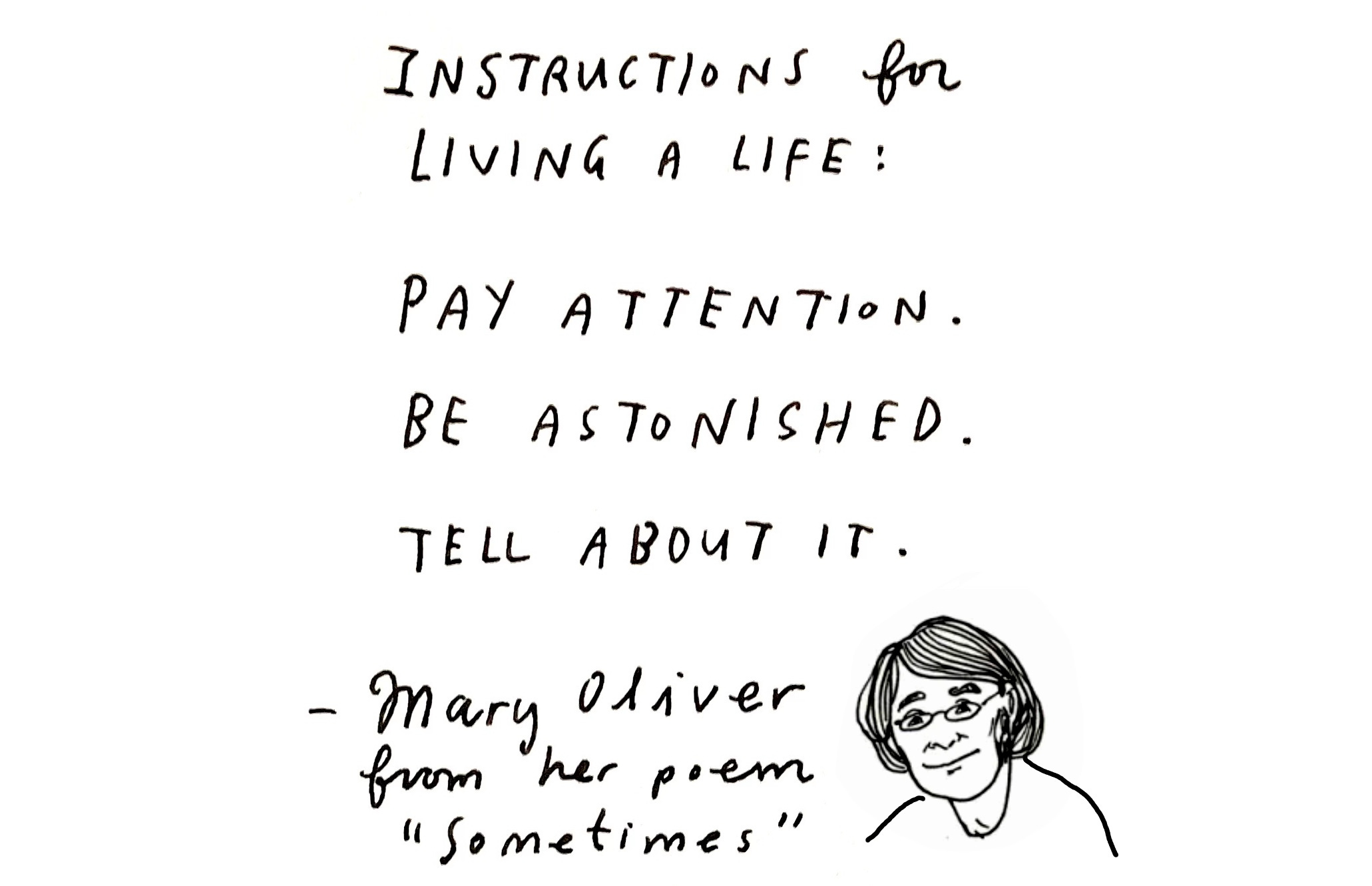
As our veteran GUT members know, drawing daily delights is one of my favorite drawing practices, and practically my raison d’être of art. This practice opens my eyes and mind and gets me feeling more joyful. And who doesn’t need that from time to time? Or, like, today.
Each day this week, we’ll use drawing to focus on a small, overlooked detail of our lives — an opening for delight. So much surprisingly curious and wondrous fodder for life and art lives right under our noses. And drawing can help us appreciate it.
Why is delight important to draw??
Okay, so who’s read Ross Gay’s The Book of Delights?
For the uninitiated, several years back, poet Ross Gay spent a year writing about one delight each day. These short essays (or “essayettes”, as he calls them) celebrate something small and overlooked that brings him joy: a 90s pop song, bees, carrying a tomato seedling on board a plane, lying down in public, gardening… Reading these essayettes, his delights become yours. (Here’s a lovely interview with him on NPR.) And here is Ross Gay talking about delights, and his book:
When I first encountered Ross’s book, I was having a hard time. Despite being the middle of summer when things are supposed to be sunny, my life felt dismal, overwhelming, and like I was drowning in demands. I wasn’t excited about anything, really.
One afternoon, something pulled me back to The Book of Delights. I threw down my to-do list, plopped my butt in the sun, cracked open his book, and read a bunch of his essayettes. Two things happened: 1. I felt lighter, less up in my head. 2. I was struck by how similar his essayettes are to drawing in terms of his process and attention.
How is Ross Gay’s delight similar to the practice of drawing?
Process: Ross’s short essays have a starting point, but he quickly meanders into unexpected territory. In “Stacking Delights,” he says that he writes, “to wonder about it with a pen and a notebook.” That’s what we do when we draw! We have a loose idea of what we are going to make. But rarely do we know where the drawing of it will lead. Let go of expectations, and a drawing will become something far richer than we expect. The appreciation of a subject happens in the doing, in the process, not in the thinking of doing it, or in the finished work. (Process over outcome, GUT peeps!)
Attention: In his preface, Ross writes:
It didn’t take me long to learn that the discipline or practice of writing these essays occasioned a kind of delight radar. Or maybe it was more like the development of a delight muscle. Something that implies that the more you study delight, the more delight there is to study… I felt my life to be more full of delight. Not without sorrow or fear or pain or loss. But more full of delight. I also learned this year that my delight grows — much like love and joy — when I share it.
This is exactly what I mean when I say “Drawing is looking and looking is loving.” (Yes, that is a link to my TED talk, which you might want to watch if you haven’t, if only to know more about who leads the Grown-Ups Table, and why I care so much about drawing.)
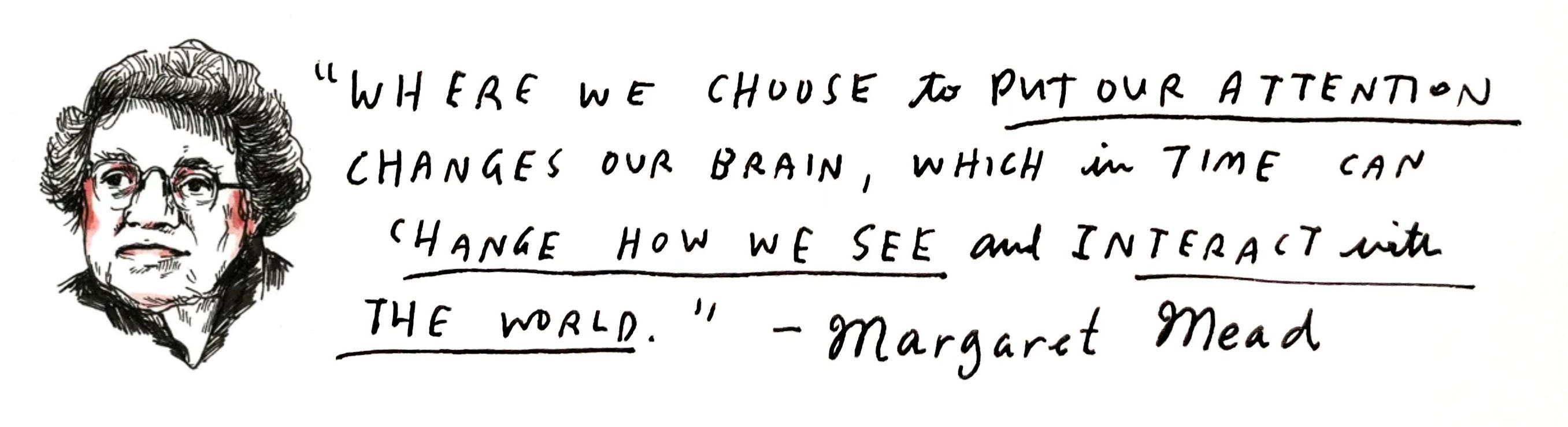
When we look closely at something like we do when we draw it — when we give something our total sensory attention, then use our physical bodies to manifest and document that careful noticing — we cannot help but appreciate it. And when we appreciate something, we cannot help but see more of it in the world.
Where we put our attention matters. We can learn so much from one of the best attention payers of all time…
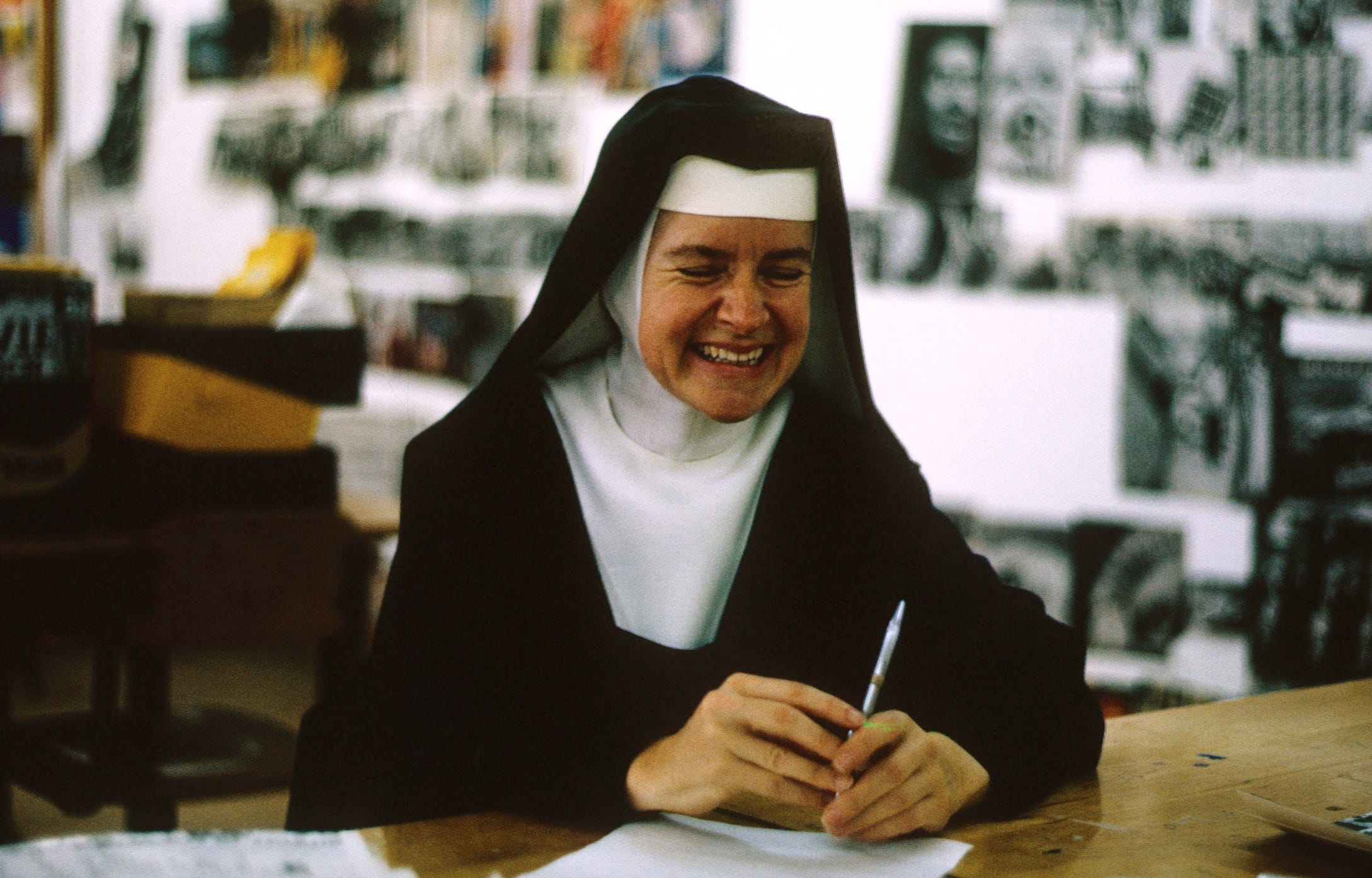
Sister Corita
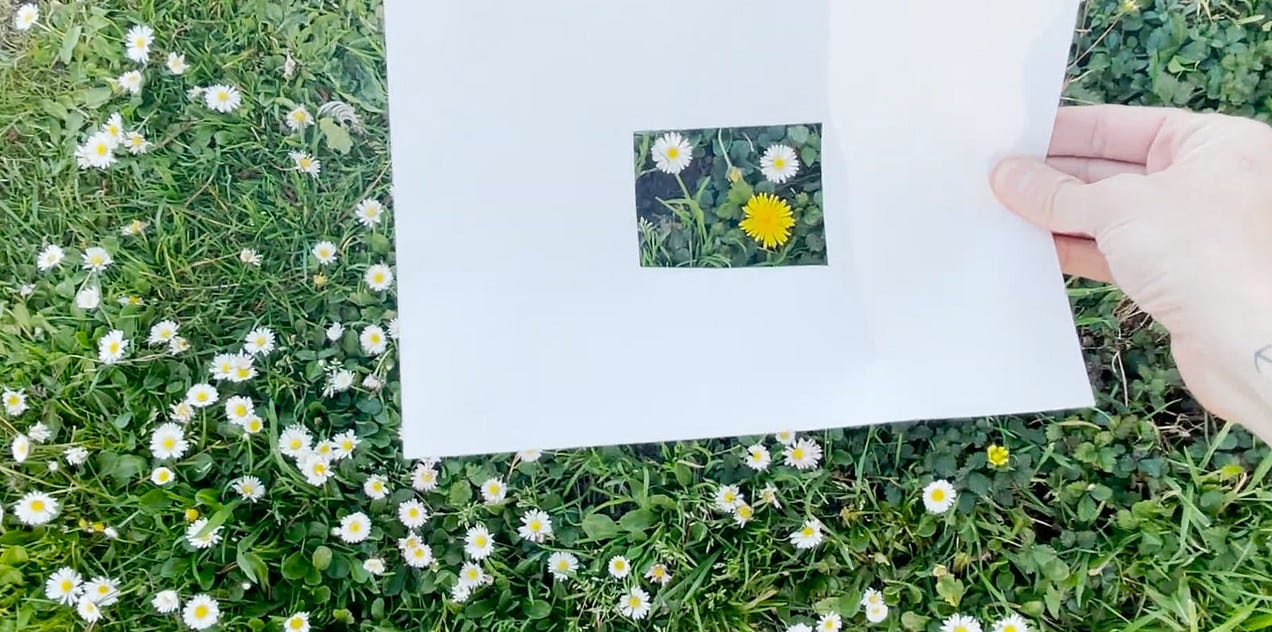
You’ve probably heard me talk about artist, educator and radical nun Sister Corita Kent before. Maybe you’ve even seen me hold up one of these Corita-inspired things called a “finder”:
Sister Corita was the centerpiece of a DrawTogether kids’ show episode on drawing the outside world, as well as an awesome DT podcast episode that’s fun for all ages. GUT people will remember that Laurel Braitman and I based a fun activity on her work for TED — “The Art of Paying Attention.” You can hear us chat about it with the wonderful Chris Duffy on his podcast How to Be a Better Human.
I love Sister Corita and her artwork for so many reasons: how she looked at the world, how she considered teaching to be both an art practice and a political act, and how she used art to promote connection and social justice.
Much of her work involved plucking imagery from the world around her — magazines, billboards, photography, you name it. She was a pop artist with a heart and conscience. In her teaching, she offered her students a device to help them look closely at the world. She called it a FINDER.
“A tool for looking is a finder. This is a device which does the same thing as the camera lens or viewfinder. It helps take things out of context, allows us to see for the sake of seeing, and enhances our quick-looking and decision-making skills.”
- Sister Corita
While frames have been used to create composition for thousands of years, Sister Corita re-popularized the finder in the 60’s. Basically a piece of paper with a rectangular window, it helps focus our attention on the world “one piece at a time” (Sister Corita’s words) — and also just helps us pay attention to the visual world in general. In our hectic day-to-day lives we’re often so overwhelmed that we literally do not see things. A finder helps us slow down, look closely, and create interesting COMPOSITIONS out of the world around us. (Yes, you are an expert in that now!)
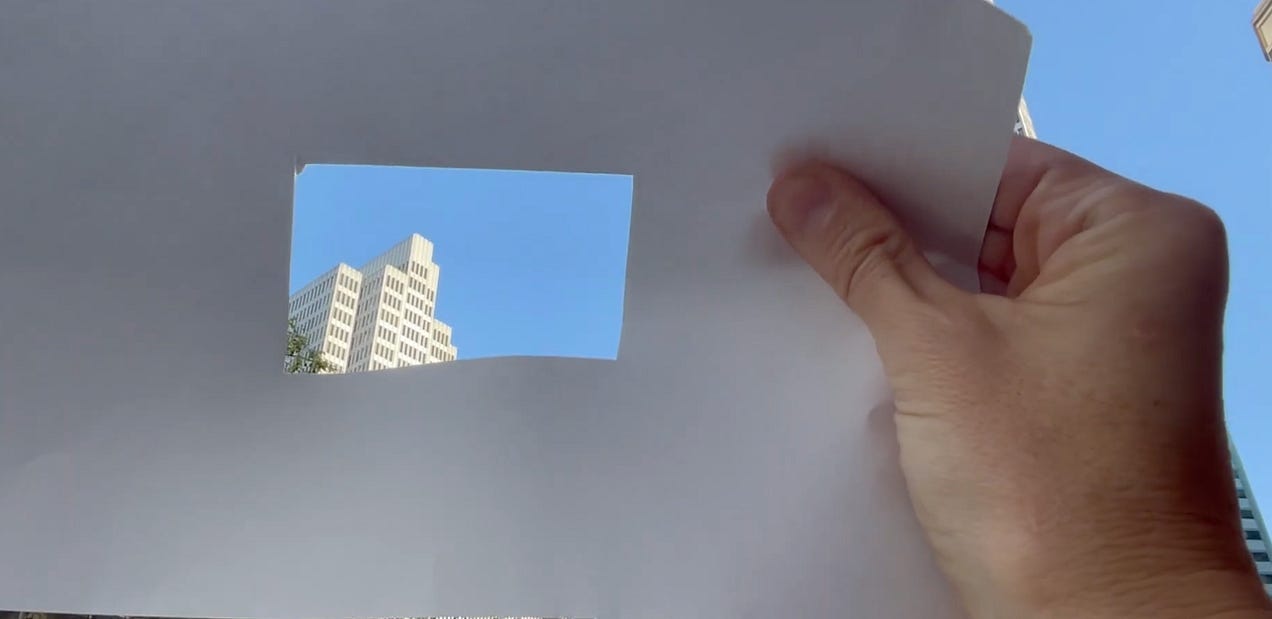
When we narrow our focus and give the world our attention, we begin to actually see what’s in front of us, and start to appreciate all the wonder and beauty there is around us.
In my experience, drawing is one of the best ways to do this. Through drawing, we notice all its details, complexity and nuance. It becomes interesting, fascinating even. Because behind every little detail is a story. And when we notice stories, we can’t help but care.

Drawing is looking, and looking is loving.
PS - Art department rules
Sister Corita taught art at LA’s Immaculate Heart College in the ‘60s, and became known for her vibrant, influential pop-art screen-prints that combined text and images to powerful effect. Unlike her pop art peers (think Warhol and Lichtenstein), she had a strong, socially engaged voice and didn’t shy away from “mistakes”, including drips and smears in her finished pieces. While contemporaries focused on concepts like mass production and consumer culture, she put her attention on humanity — in her art and with her students. You may also remember those wonderful Art Department RULES that hung in her classroom.
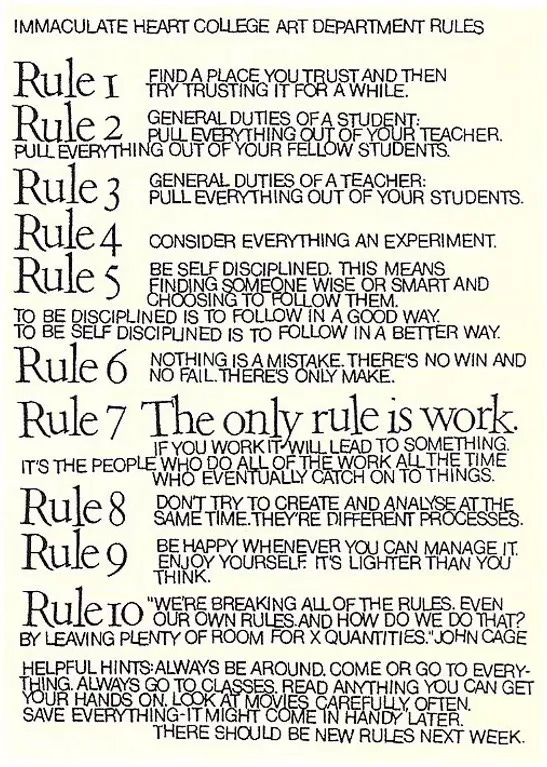
Consider everything an experiment. - Sister Corita
Ready to dive in?
