


Helloooo GUT Friends!
Over the last week we paid tribute to David Hockney, whose life and work inspired us profoundly. Your drawings were a joy to behold! The love, care, and attention you put into them leapt off the page—a beautiful collective homage to Hockney. Everyone, this chat is not to be missed.
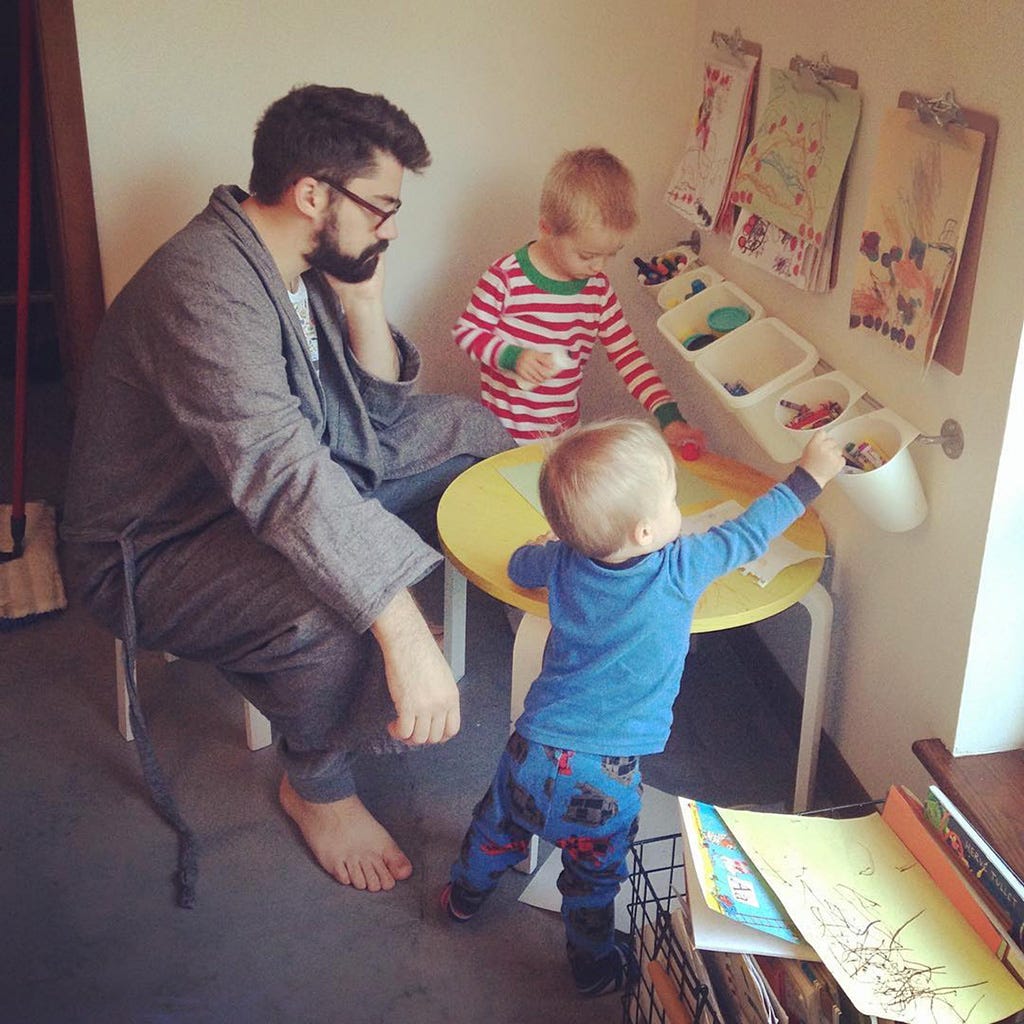
Today is Father’s Day, and we can’t imagine a better guest artist than our friend Austin Kleon. His newest book, Don’t Call It Art: 10 Ways to Create Like a Kid Again, came out this month. It’s all about what he’s learned from being a dad to two wonderfully creative kids.
We also know Father’s Day can bring up complicated feelings. If today’s a hard one, we see you. ❤️
Austin Kleon x DrawTogether
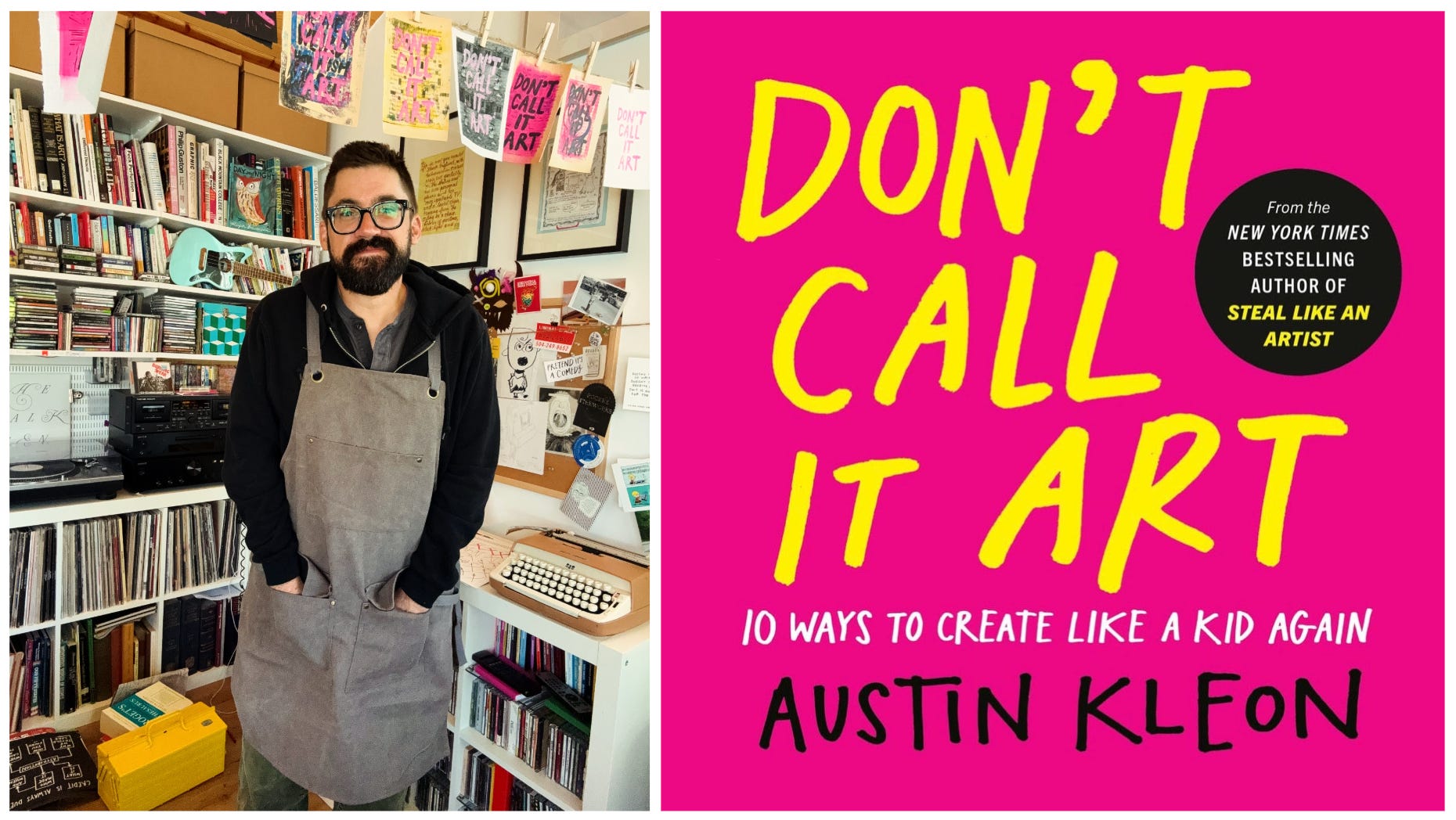
You probably know Austin from one of his New York Times bestselling books about creativity: Steal Like An Artist, Show Your Work!, and Keep Going. He is a newsletter pioneer, having published every darn week since 2013. Hundreds of thousands of people turn to his weekly lists for tips on what to read, watch, listen to, and ponder.
The Atlantic called him “positively one of the most interesting people on the Internet,” and we agree. In previous lives, Austin worked as a librarian, a web designer, and an advertising copywriter. He lives in Austin, Texas, with his wife/editor Meg, and two artist-musician kids. You can find him online at austinkleon.com and subscribe to his phenomenal newsletter here (highly recommend!).
What a treat to have Austin join us today for a Q&A on his fabulous new book. Please give him a warm welcome!
Q&A with Austin Kleon
Wendy: Your latest book is all about how your kids have inspired you. What did they teach you about making “art”?
Austin: The biggest thing I learned was what the artist John Baldessari said he learned from watching kids draw, when he was an elementary school teacher: Kids don’t call it art when they’re drawing, they’re just doing stuff. So if you don’t call it art, it takes the pressure off.
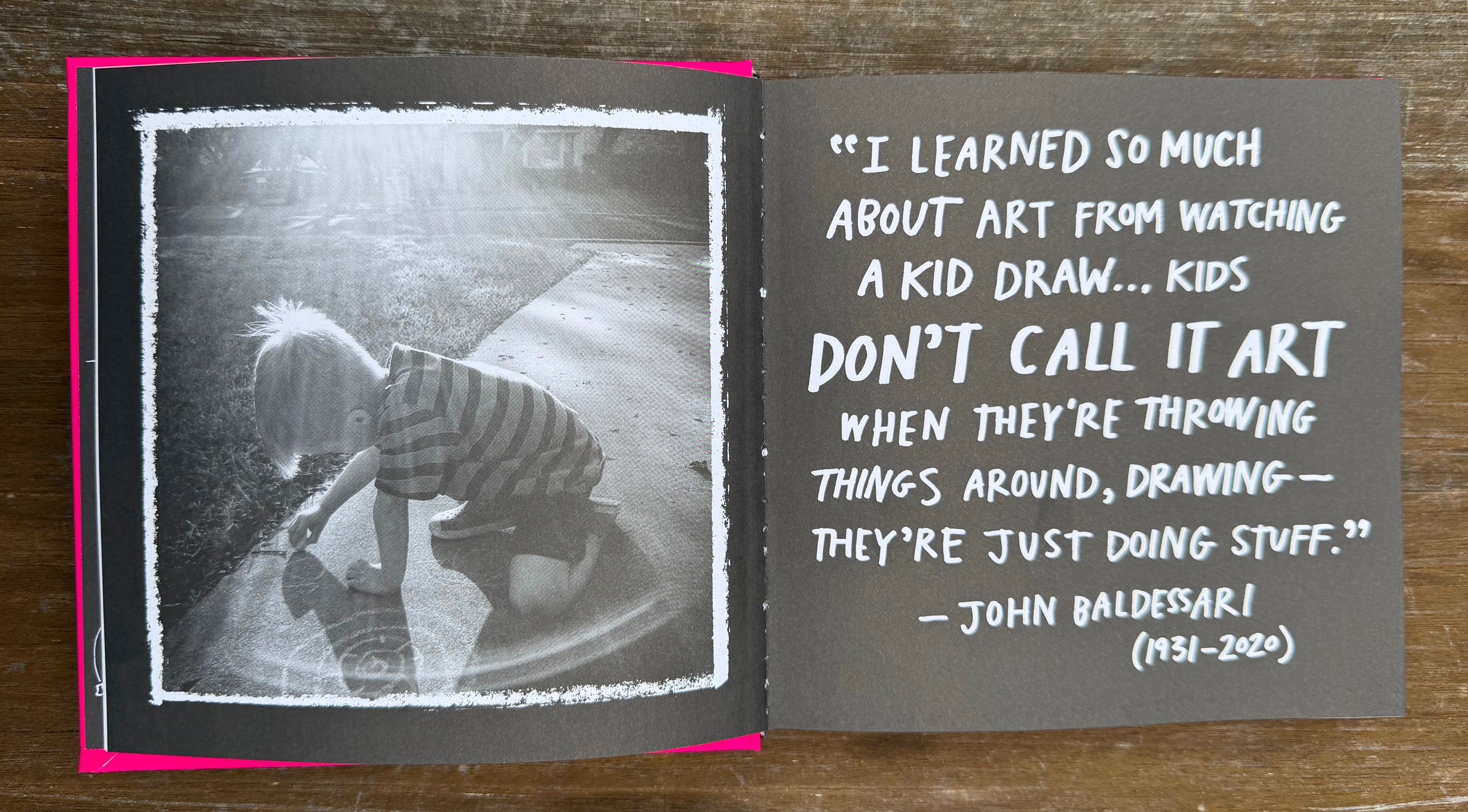
But the other thing Baldessari talked about is how he didn’t think you could really teach art, you could only set the stage for it. So while I was learning to create the conditions under which my kids could thrive, I was wondering all the time why I didn’t create the same conditions for myself!
It was the same thought I had when I read parenting books: Why aren’t we doing this stuff for ourselves, not just our kids? Why aren’t we all on a sleep schedule? Why don’t we all limit our screen time? Why don’t we all take time to play?
I basically learned how to re-parent myself a bit, and show myself the right love and care so that the little 4-year-old in me could come out and play. And that’s what I’m attempting to teach the reader in Don’t Call It Art.
Wendy: We have so much to learn from kids (and our own inner kids)! This feels like a truth we keep rediscovering—your book is filled with quotes by artists and other creative folks expressing the same sentiment. Why do you think we keep forgetting this and need to be reminded of it?
Austin: Because the world is run by a bunch of stupid grown-ups!
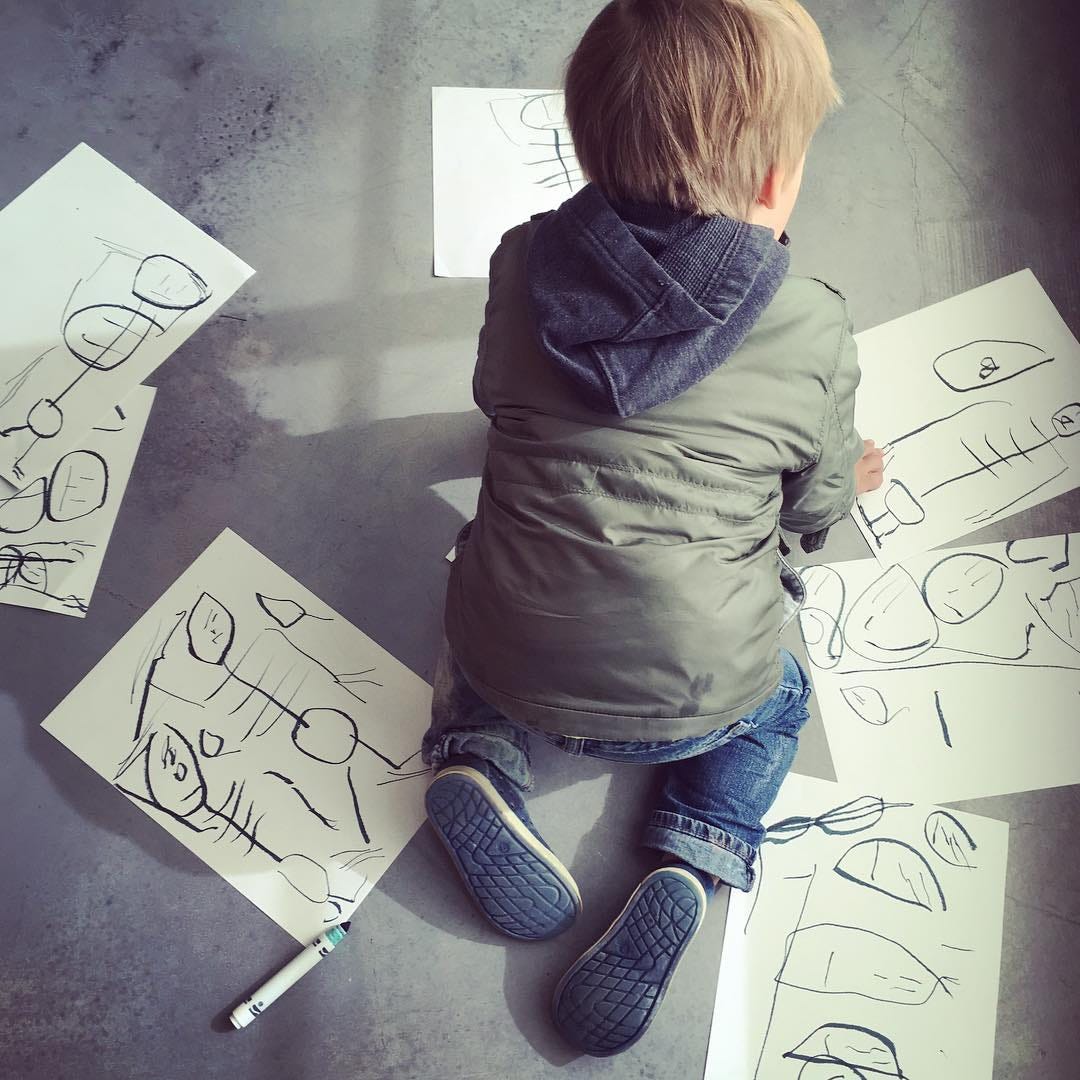
Wendy: In this book, you really do weave together so many different voices and anecdotes. How did you choose what to include or exclude? And how did you decide who you wanted to point towards?
Editing for me is sculptural and subtractive in the sense that it’s mostly a process of cutting and cutting and cutting until I get to something that feels essential, and hopefully, inevitable.
I think of every book of mine as a shipwreck in the sense that I start out with delusions of grandeur and a great big vision of a three-masted pirate ship or a battle cruiser or something, and then my vision of the ship smashes on the rocks, and I wind up building a dinghy out of the broken pieces. But as long as the thing floats and takes the reader where I want to take them, I’m okay.
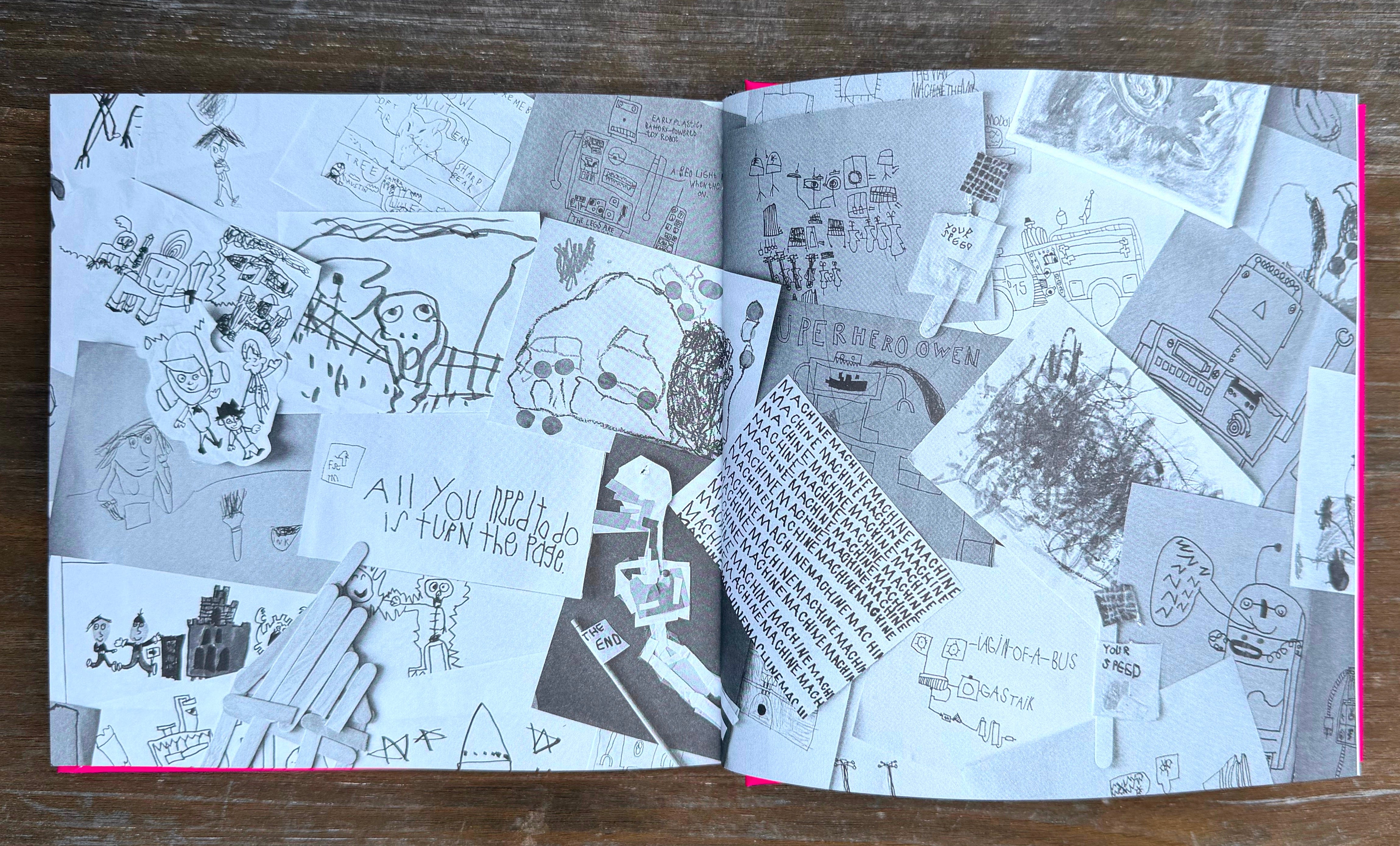
As far as who I point to, I try to point towards my heroes and the people I think who have it right. In this book, that was my kids and artists like Lynda Barry and Corita Kent, who find/found creative inspiration in kids.
Wendy: How was the process of writing this book different from the ones you’ve done before? What did you do differently or learn making this one?
Austin: This one has cooked way longer than any of the other books. I’ve been working on it for over a decade. I thought I was ready to write it in 2020, but then the COVID pandemic hit, and my kids were back at home, and I realized we had more adventures to have before I could write about them. In hindsight, I’m grateful I got that extra bit of my apprenticeship to them.
Books are a bit like kids if only in the sense that whatever you learned on the last one might not work for the next one. I think the biggest thing I learned while making this book is that I like to work much, much faster. (Steal Like an Artist, for example, was built off a decade of work, but it was made in a couple of months.) But also that I’m really grateful for my newsletter, which is where I come up with so much of the stuff that eventually goes in the books, and the instant feedback that my readers provide.
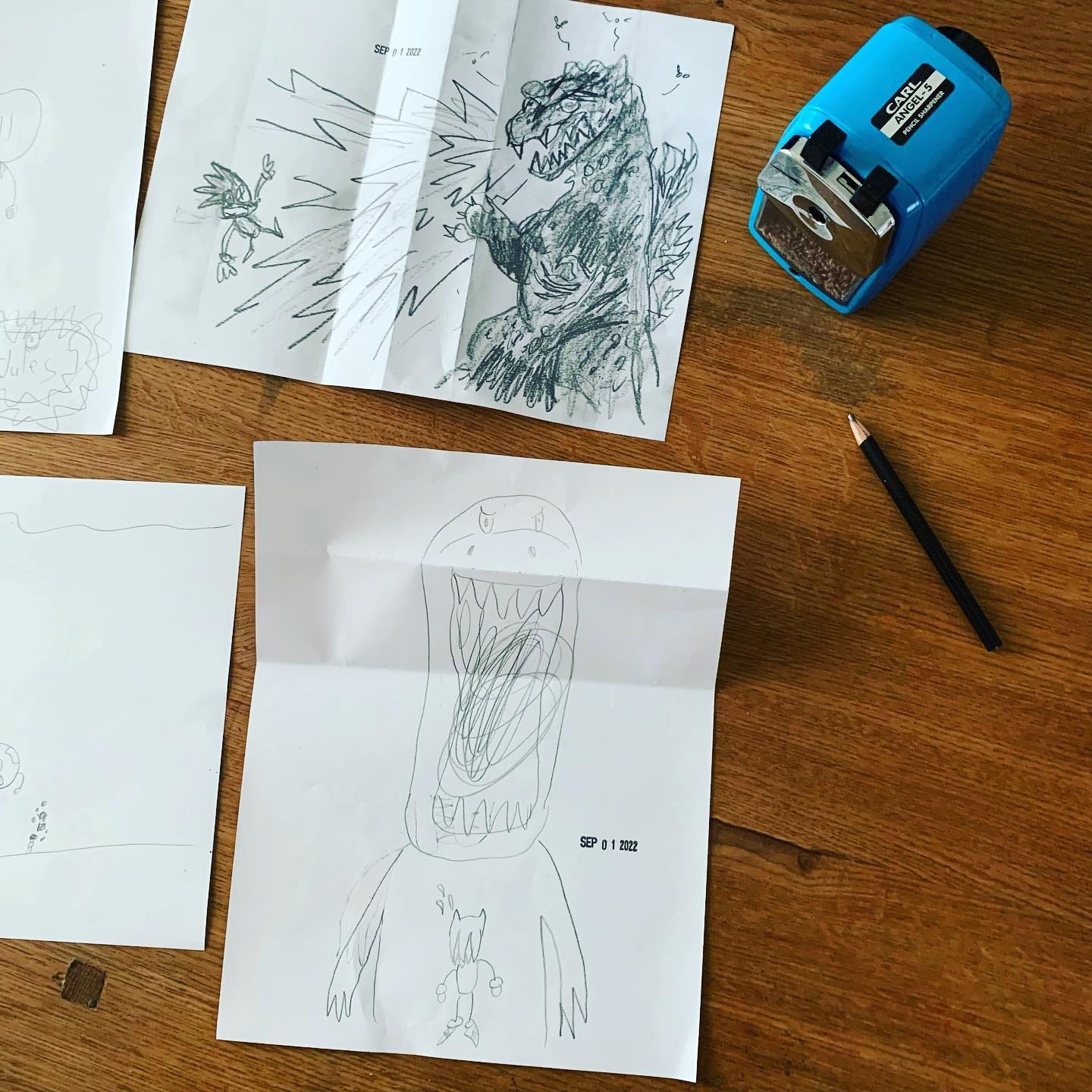
Wendy: You point out that we adults can lose sight of our own likes and dislikes, but kids know exactly what they like and will dig into those things obsessively. You then encourage readers to embrace their own obsessions, which leads me to wonder, what are you currently obsessed with?
Austin: All my life, I’ve been obsessed with music. Listening to it and making it. And my firstborn, Owen, is a natural musician and he rekindled a lot of that obsession in me through his own obsession with it.
From the music-listening perspective, I’m obsessed by how music puts people on the same frequency, how it’s a mood generator, how you can create your own world by creating a mixtape of other people’s songs, and how songs are like little time machines that put you back in the place you were when you first heard them.
From the music-making perspective, I’m obsessed with songwriting and how great songs can make up for the limitations of a musician, the difference between learning something by ear vs. sheet music and how looking at sheet music can cause you to mistrust your ears, and how bands form their own chemical compounds that can be fragile and volatile. Basically, I think music is the best thing humans do.
Wendy: You close the book reflecting on the ways that having a vision for your life and work can actually be limiting. Why should we let go of the plan, in parenting and in creating?
Austin: Well, you don’t have to let go of your plan, you just need to hold it lightly. I always joke that for a writer, your plan gets you about as far as your desk. Then you have to start improvising.
But the most important part of life and work, I think, is to not let any mismatch between what you had in your head and what’s actually happening throw you off too badly. For the artist, responding to what’s actually happening on the page is much more important than trying to adhere to whatever you had in your head. Same goes for parents: Whatever you thought it was going to be is a lot less important than working with what actually is.
One of my favorite opening lines in any book is from Faber and Mazlish’s How to Talk So Kids Will Listen & Listen So Kids Will Talk: “I was a wonderful parent before I had children.”
It’s true of artists, too, I think: Everybody’s a wonderful artist before they start trying to make art!
Thank you so much Austin! And stay tuned for a special drawing assignment from him!
