


My dear, dear 30 day peeps. GUTsters. DrawTogether community. League of superdrawers!
It’s Day 29. Our penultimate day of daily drawing. I am bowled over by your brilliance. Impressed by your perseverance. Astounded by your creative ambition. You. Rock.
I will save the speeches for tomorrow, quite literally. Today, we look back at all we’ve drawn. Not only because it feels good to see how far we’ve come, but because reflection is a crucial step in learning. No surprise we are going to use drawing. But not just because I’m the draw kingpin trying to get you and your friends all hooked, tho that is true. But because drawing something helps us remember it.
Draw to remember
According to researchers at the University of Waterloo, drawing something helps bake it into your brain TWICE as much as writing.1 In a 2016 study, participants were shown words and told to either draw a picture that represented each word or write the word down on paper. Later, they were asked to recall the words. People who drew pictures recalled more than twice as many words as the ones who wrote. And get this: The “quality” of the drawings didn’t seem to matter. It just mattered that people made drawings.2
Today we are going to make a little bingo card of all the drawings we’ve done. A little cheat sheet where we can see all our drawing adventures in one place. A few of you may have already done something like this at the beginning of your books. If so, all good. Like they say in art, music, dance sports, and everything that requires practice to grow: Do it again.
But before I tell you exactly what we’re drawing, I’d like to point out one fun art-trope we’ll include. It’s a….
Meta-drawing!
Because this is day 29, we will include a drawing of day 29 IN the drawing. A drawing of the drawing inside the drawing (aka a metadrawing) is called “mise en abyme.” It’s pronounced “meez on a-BEEM”. As in: He’s on a beam. She’s on a beam. They’re on a beam. Me’s on a beam!!! LOLOLOL. Somebody stop me!
Another less fun phrase for this is “recursive artwork.” Here’s one of the most famous examples of mise en abyme in Western art history:
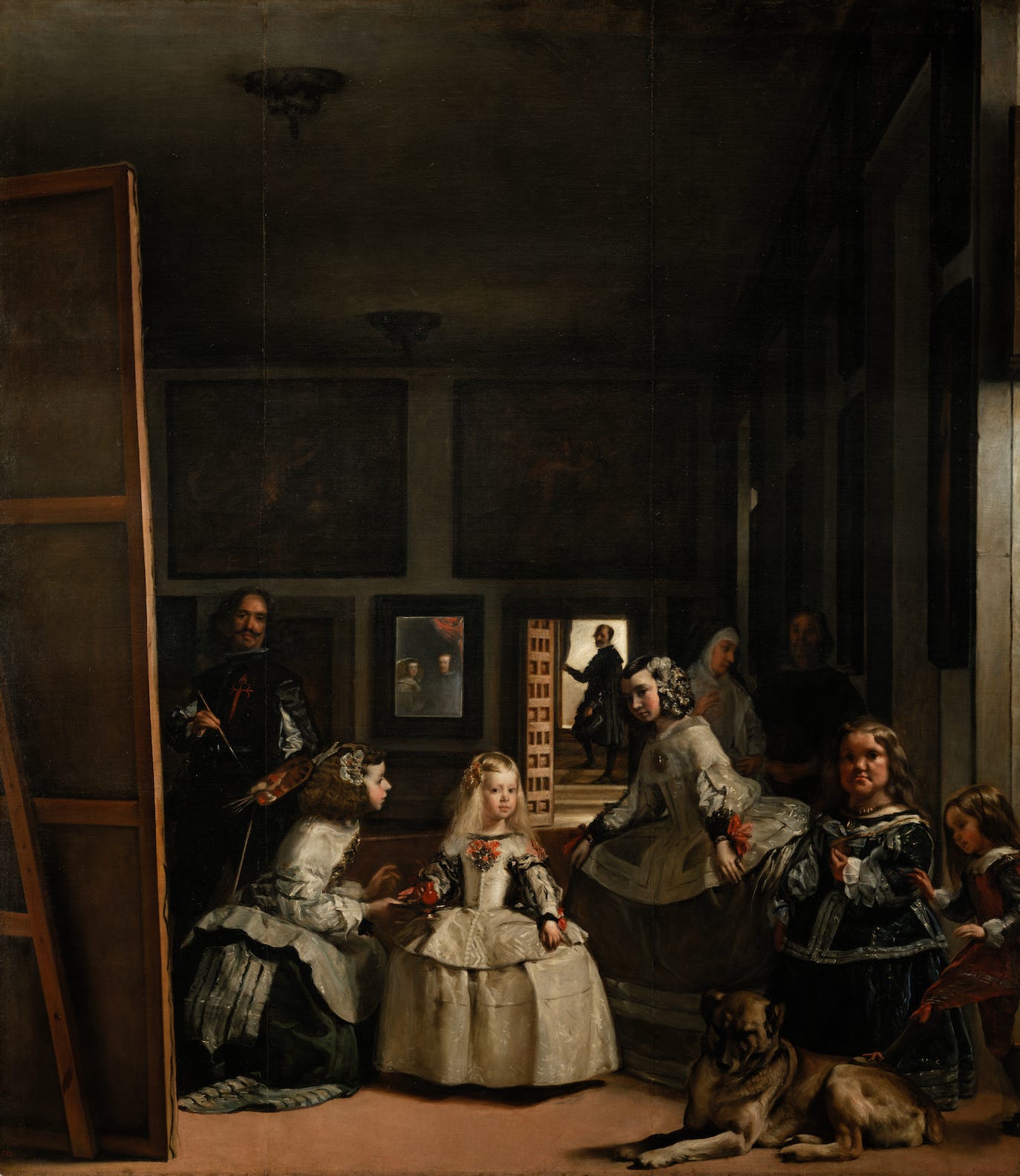
Diego Velázquez’s Las Meninas (The Ladies in Waiting, 1656) is a whopping 10 feet by 9 feet wide. In it, Velazquez showcases all that painting can do —light, color, perspective, narrative. He even includes a painting of himself painting the painting in the painting itself! 🤯
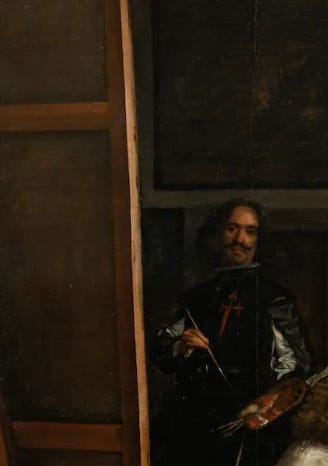
The painting hangs in the Museo del Prado in Madrid and I have never seen it. If anyone wants to go with me later this year, let’s do it.
I don’t want to unseat Velazquez and derail the trajectory of art, but here’s a recent example of mise en abyme that gives him a run for his money.
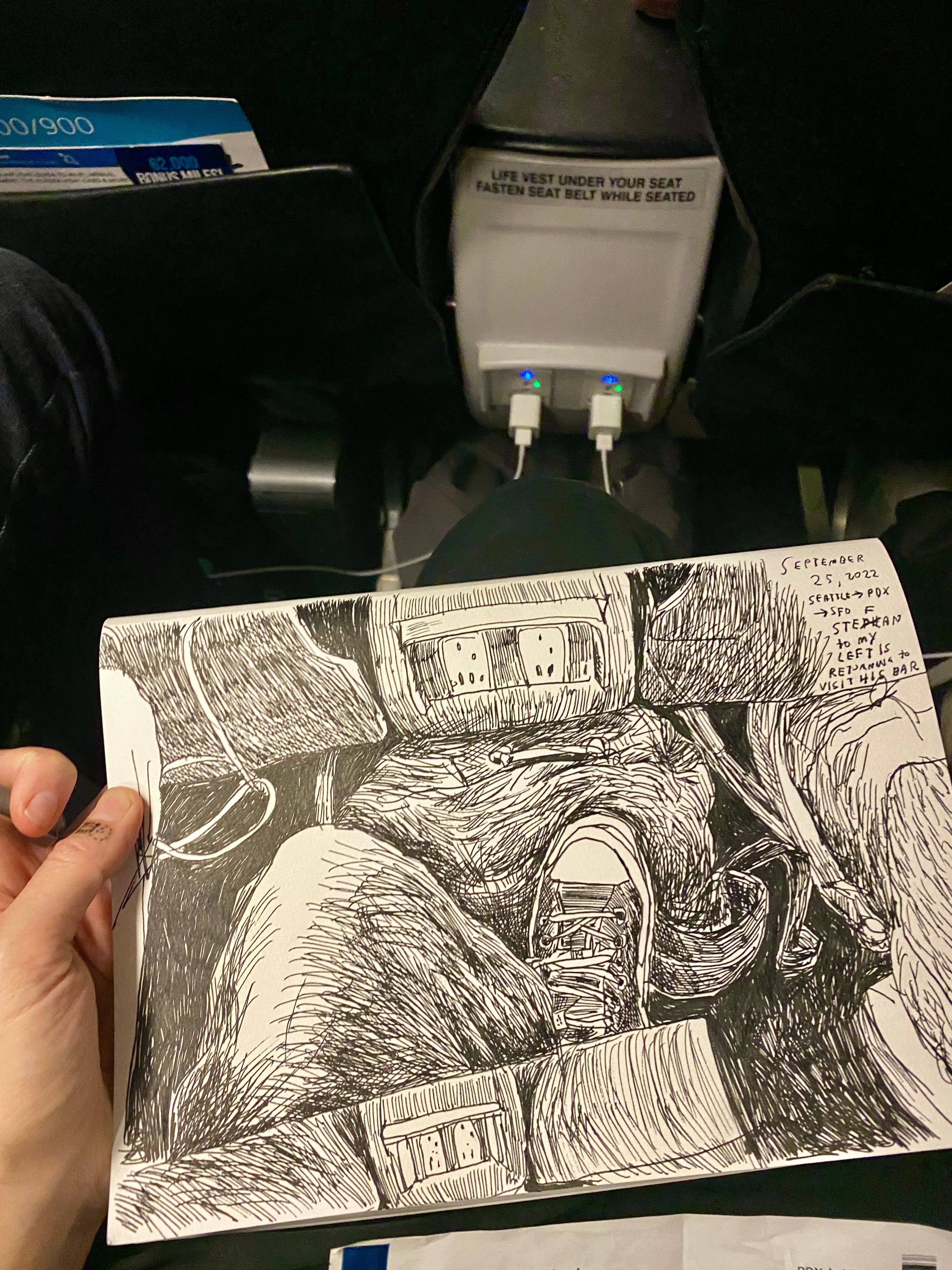
Just kidding, that’s me drawing in the middle seat a few years ago. See my drawing inside the drawing? Proving you don’t have to be Velazquez or work on a giant canvas or create works of great historical significance to “Me On A Beam.”
Today, you are going to be BEEMing yourself. You’ll see what I meenz. Let’s beem in. (Somebody stop meez!)
Today we review our drawings, with drawings. Including the drawing we’re drawing.
