

The Radical Nun Who Wants You to Use Your Scissors
Cutting it up with Sister Corita.

Helloooo DrawTogether and GUT friends!
Over the last week, we imagined our dream artists retreat! We sketched out some features we’d like in an ideal world, and also some conditions we can actually implement in our real lives. And we saw in the chat echoes of what Wendy shared: desire for ample work time and space, sources of inspiration (nature, books, art, creative prompts), and nourishment, whether through food or meaningful connection. We hope you all get to incorporate some of these into your lives!
This week we’ll be looking at collage, through the life and work of an all-time great, Sister Corita Kent.
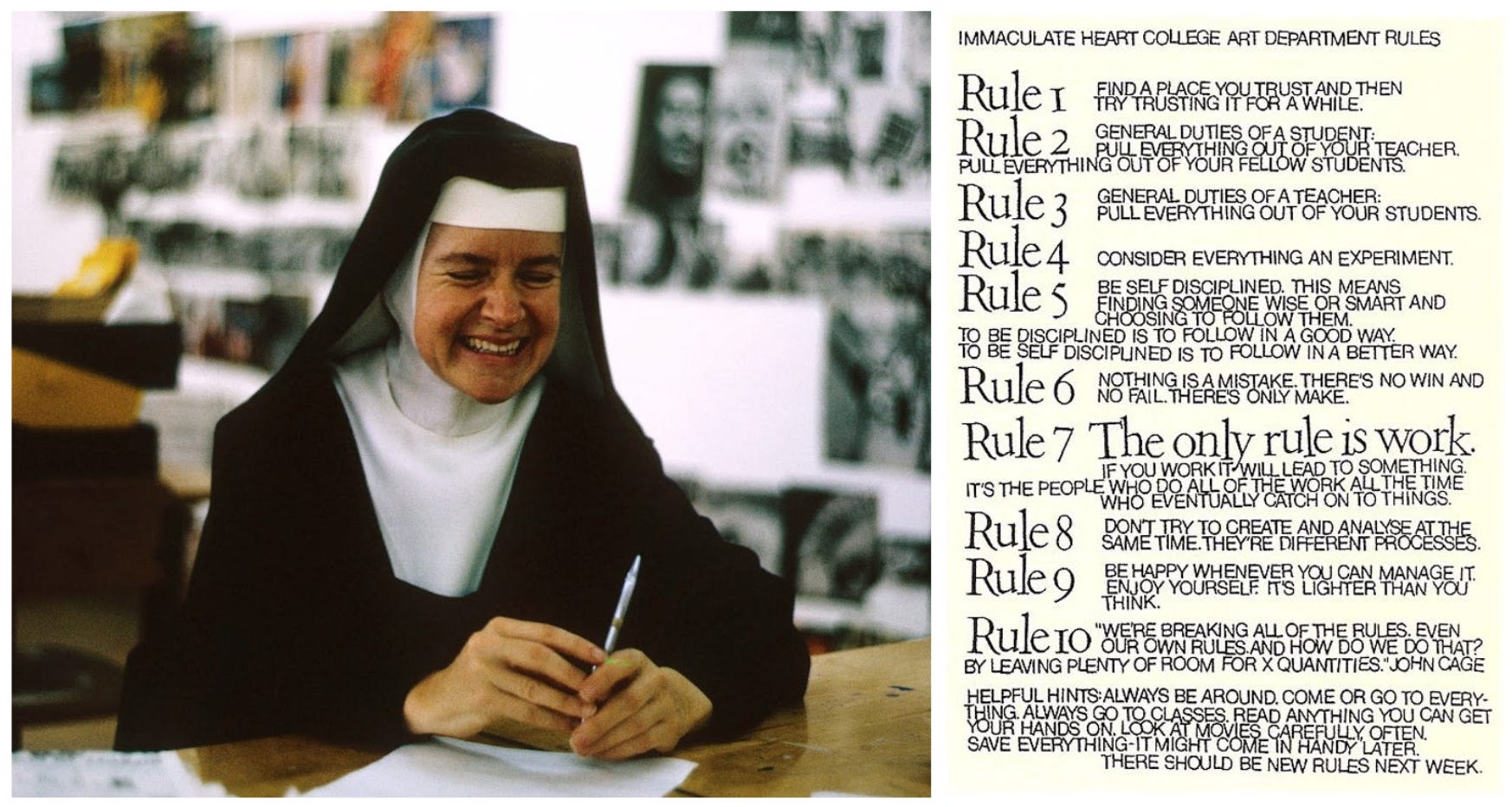
Corita Kent
If you’ve been part of DrawTogether/GUT for more than a minute, you’ve heard Wendy extol the virtues of Sister Corita. Corita was a radical nun, artist, and educator—and a big influence on Wendy through her joyful approach to art, teaching, and social engagement.

While Corita made silkscreens, lithographs, and woodcuts (aka prints), her overall approach was collage, or the process of combining different materials into a new piece. She’d often mix vibrant colors, found imagery, lettering, and handwritten text into a single work.
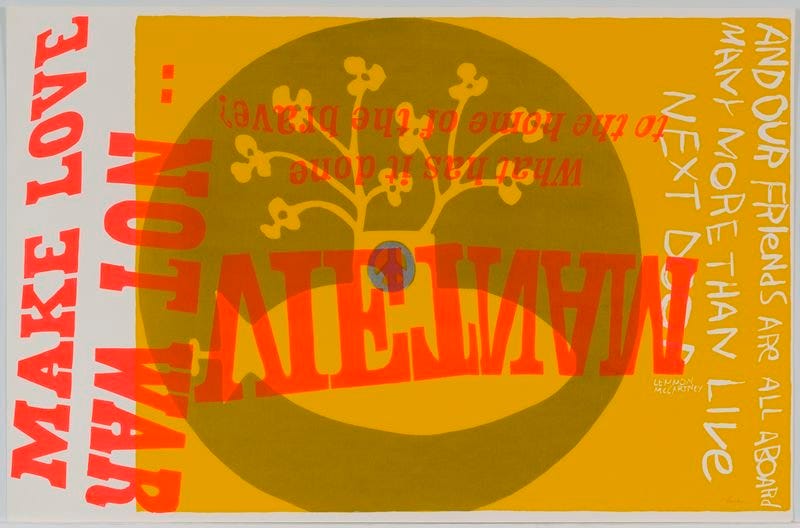
Her artwork wasn’t just personal, creative expression. Corita used it to advocate for social justice, and her platform to highlight injustices and inspire creativity, hope, and change. She didn’t shy away from hard topics, or for that matter from “mistakes.” She often included paint drips and smears in her finished pieces.
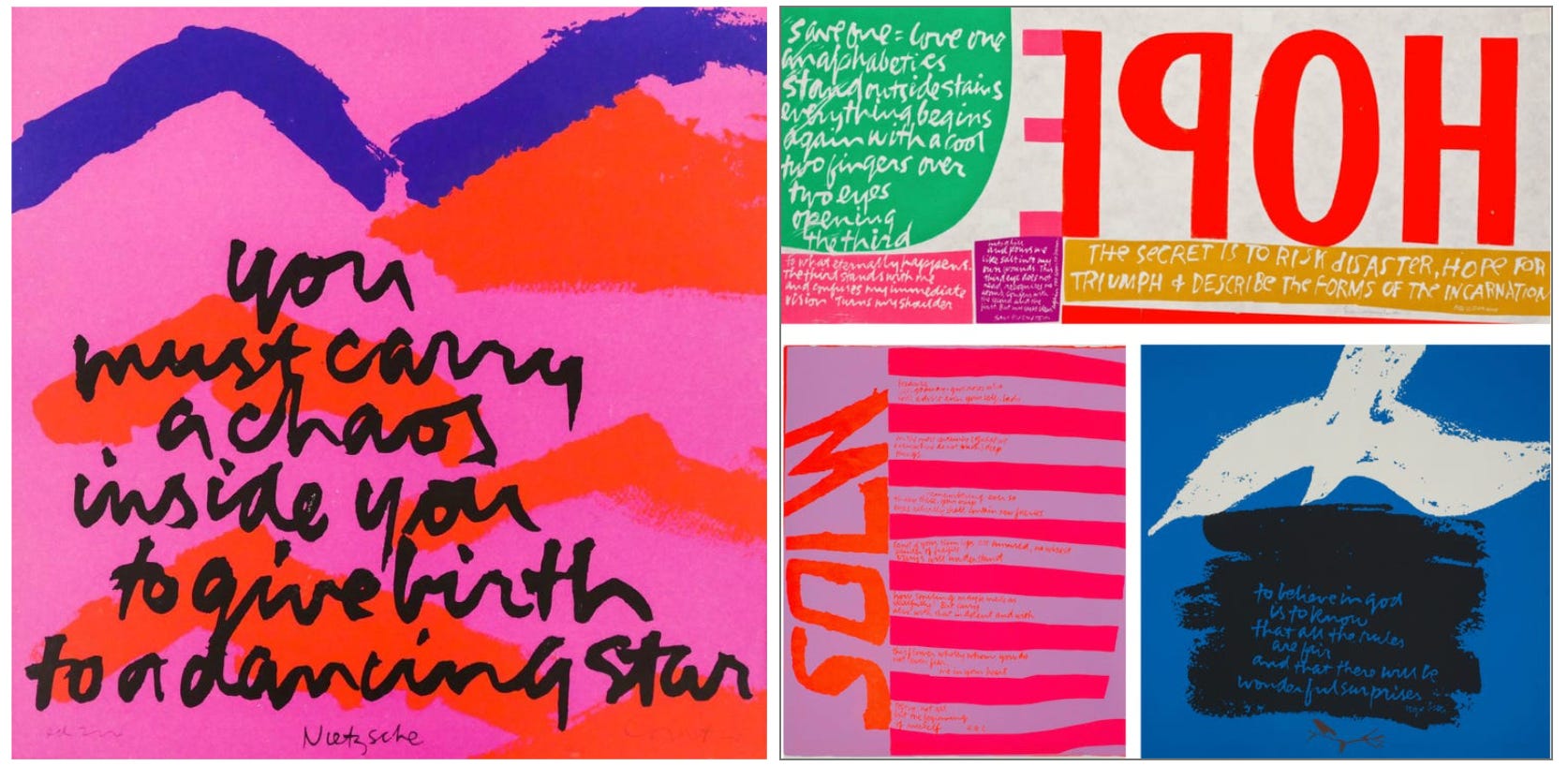
Corita used juxtaposition to inspire questions and plant ideas. She used found commercial materials like other pop artists of the time—Warhol in particular—but she contrasted everyday commercial images like logos and advertising slogans with the social and ethical ideas she found meaningful. Where others capitalized on the commercialization of the time, she insisted on bringing it back to the heart, and humanizing it.
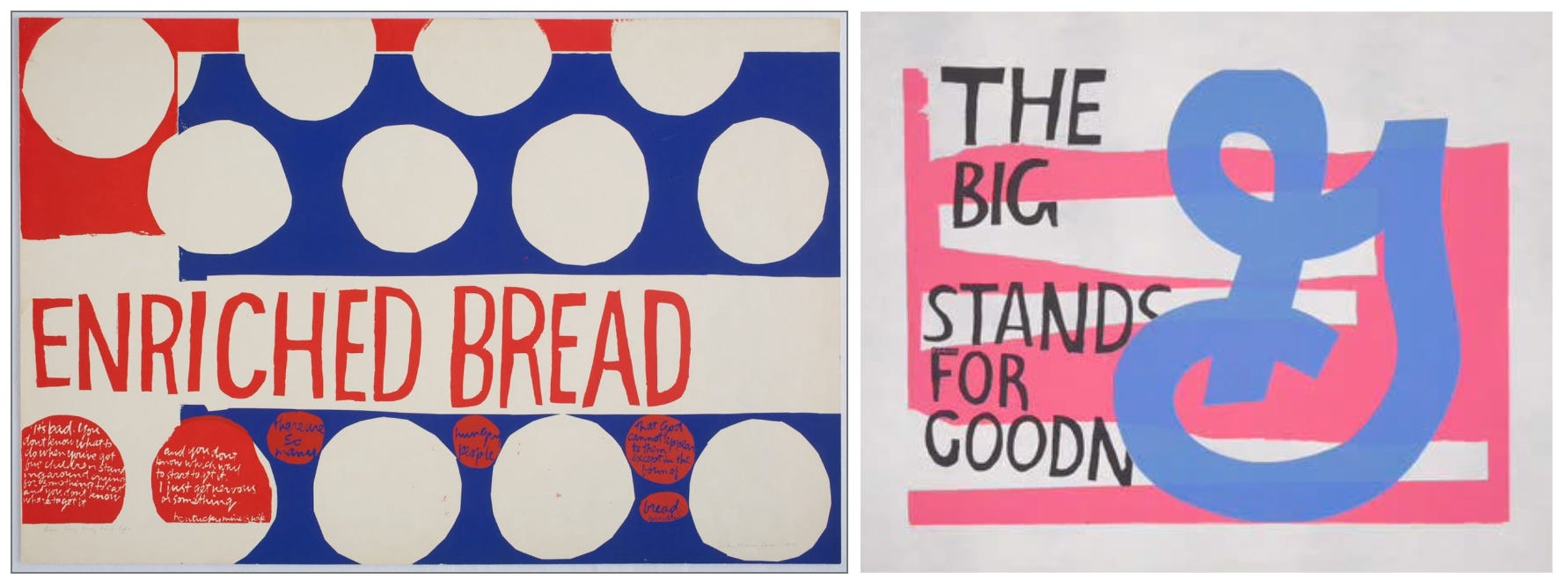
Starting with the Vietnam War and throughout the ‘60s, Corita’s work became increasingly political. She left the nunnery in 1968, and moved to Boston to lead a secular life. In time her work became quieter and more inward. Diagnosed with cancer, in the 1970s, she passed away in 1986. Her influence remains deeply felt in the art and social and political engagement of many artists working today.
We dedicate today’s assignment to Sister Corita.

Assignment: Text + image, Corita-style
Here’s your collage prep!
