


Hey fine DrawTogether GUT friends.
We loved seeing what you shared in response to Wendy’s prompt to draw the same thing every day, and to see how you might capture change. We watched flowers bloom over the week, colors shift with the sun, and steam rise from the day’s first coffee. Seeing how many wonderful ways there are to draw the same thing also reminds us that there’s no one “perfect” image, which leads us into our topic for this week…
Perfectionism and us
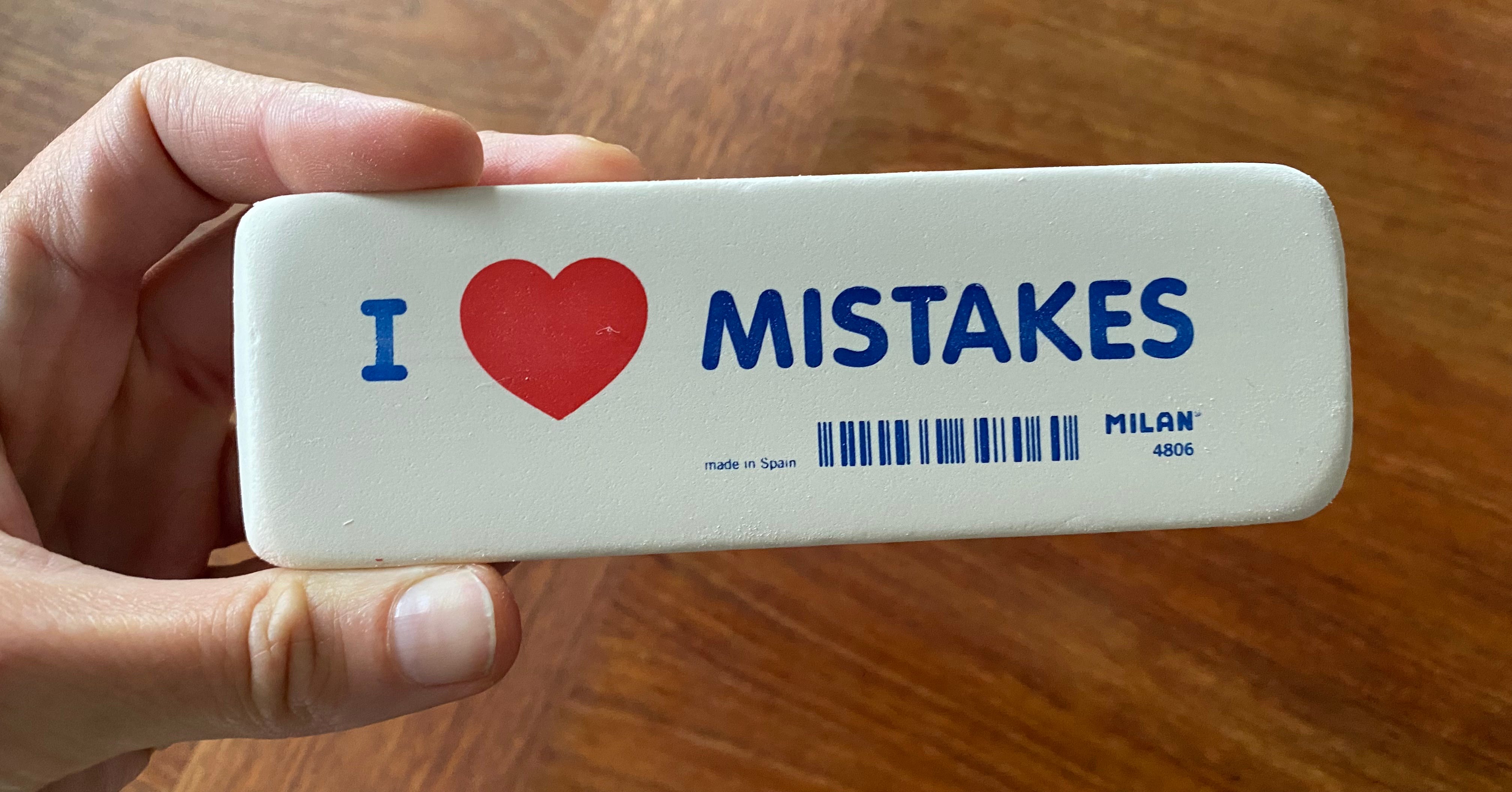
Wendy has written at length about our old friend perfectionism here on the DrawTogether GUT before. After hearing an interview with the author and researcher Thomas Curran about his new book The Perfection Trap, she immediately bought it and now recommends it to everyone!
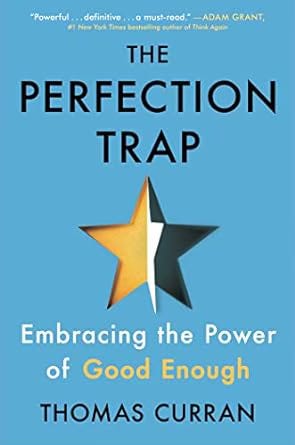
Viewing Curran’s book through the lens of drawing led us to wonder: What motivates people to draw—and what holds them back from starting? How does perfectionism shape the way we judge both the process and the finished work? And how might we learn to feel more at ease with ourselves and what we create?
The perfectionist trap
What is perfectionism?
Perfectionist narrative: According to Thomas Curran, perfectionism isn’t just a character quality. It’s an entire worldview. Perfectionism is a deep-down fear that we are never enough, and that we could always do—and be—better. As a result, we live in a perpetual state of deficit, always feeling bad about ourselves and/or others.
Perfectionist’s behavior: By trying to make things perfect, we attempt to alleviate the shame we feel about that perceived deficit. We are terrified that we will be seen, and judged, for who we really are. Our standards are so high that we work around the clock—or else we procrastinate and never start on things in the first place—to avoid failure. Because if we did do less than we expected, the secret would be out: We aren’t all that after all.
Ugh.
Maybe you relate to some of that. Maybe all of it. Maybe none. Though none would be surprising, honestly, because as Curran points out (and this is in contrast to some earlier research on perfectionism), these high expectations are the air we breath.
Where does perfectionism come from?
According to Curran, these massive expectations for improvement and growth are foisted on us not only by family and genetics, but a society that requires us to always be more, want more, and grow more. If a capitalist system ceases to grow, the entire thing falls apart.
Messages from advertising, work, and even our “growth mindset”-preaching education system tell us that we should always be striving to do better, do more, create better. If we do grow and get better, we’re taught, we will be better people. And therefore rewarded with more love and respect.
OOF.
One of the reasons for the skyrocketing levels of perfectionism (and its bedfellows anxiety and depression) in young people today? Two words: Social. Media.
OOF. OOF.
Sure, we’re products of both nature and nurture. But Curran’s work nevertheless resonates deeply with us. How about you? Do these forces influence the standards you hold yourself to? How about others?
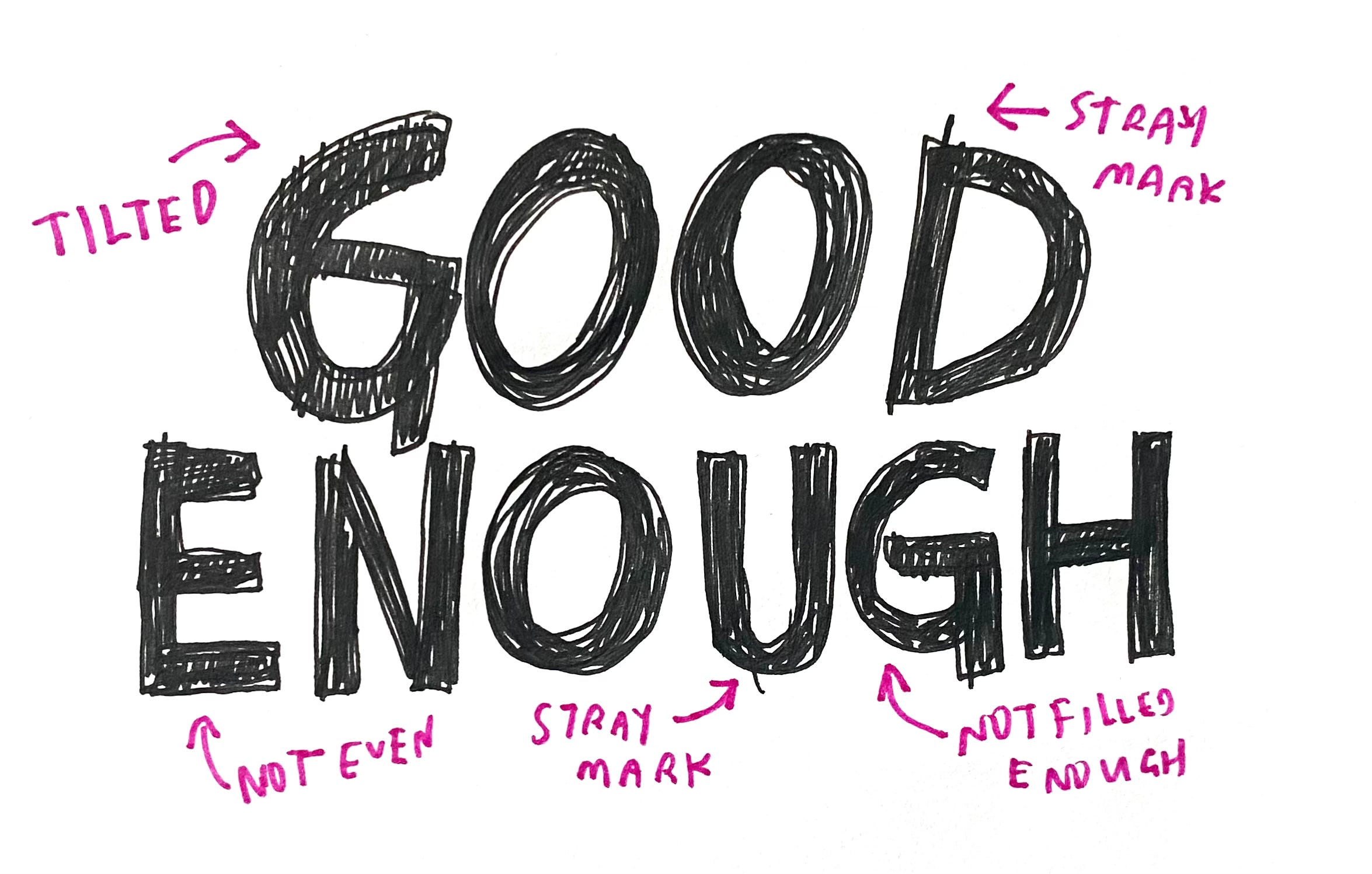
So what can we do about it? Be “Good Enough.”
Curran suggests the antidote to perfectionism is “good enough.” Think about the most tender, insecure parts of yourself. Instead of saying “I can always be better,” imagine thinking, “I am good enough.”
Seriously. Stop and take a breath. Reflect on a quality you are particularly hard on yourself about. Now take another breath and say to that quality, “You are enough.” And say to yourself, “I am good enough. Inside this body, this heart, this mind, this community, this culture, this world, I am good enough.”
The very concept of “enough” puts the kibosh on the idea that we need to always be better, to be more, to keep growing without end. It disrupts the system from the inside out.
What is a “Good Enough” drawing?
Perfectionism plays out, well, perfectly on the drawing table. The drawing table is like a lab for addressing these issues, playing with them, and seeing if we can let go of them.
What stops us from drawing? What keeps us going when things get rough? What makes us start again after time away? What is a “good enough” drawing? What is a “good enough” artist??
We think a “good enough” drawing is one made with the focus on the experience of drawing, instead of the outcome. The experience we have making a drawing—the unexpected moves and mistakes and surprise gifts—leads us to this image that appears on the page. With every breath we’ve taken, every decision we’ve made, every person we’ve loved and let love us—all of these have taken us to this moment right now, to this drawing. It is not perfect. But my god, with all our hearts, we tried.
The practice of making “Good Enough” drawings
As you know by now, we here at the GUT believe we learn things by doing them with our bodies, with PRACTICE—not just reading and thinking about them. So this week, we’re offering the opportunity to deliberately create GOOD ENOUGH DRAWINGS. We will see how they feel to make. And how we feel about what we’re left with. And how we feel about ourselves when we make them.
If they prove helpful, perhaps they will shift our perfectionism a little at a time, away from “I can always be better” to “I am good enough.”
