


Hello incredible crew of full-fledged, full-on GUT artists.
Mark your calendars: Sunday, Feb. 1 at 10am PT, we will have a closing party for the 30 Days of Drawing for GUT members on ZOOM! I will send out a link on Day 30 (Friday). This is a members only event, and no you do not have to have completed all 30 days. Save the date!
As of today, we have drawn together every single day for FOUR weeks. If you slipped a day or two (or 12) whatever. Who cares. You’re gold. Every day you draw is money in your creative bank. Just keep going. The return on your investment is this: a more curious, connected, and caring world, and a happier and more grateful life. I cannot think of a better way for us to spend our precious time.
Yesterday we drew a sequential, four-panel comic. It was autobiographical, illustrating four moments from our day, in the order they happened. Today, we are going to stick with that sequential, four-panel approach, but instead of making it so literal and representational, we are going to make it more about shape, color, line and feeeeeling. Today we’re going to draw Abstract Comics.
“Wendy, come on. What the HELL is an abstract comic?”
I’ve asked the same question myself, friends. How could a comic be abstract. Well, imagine this: Take a comic, keep the frames but remove all representation. You’re just left with a bunch of lines and shapes and space and color, right? Welp, that’s an abstract comic. And they are pretty darn cool.
Here are a few examples from the wonderful (and sadly out-of-print) book titled, aptly, Abstract Comics (edited by Andrei Molotui, Fantagraphic Books).
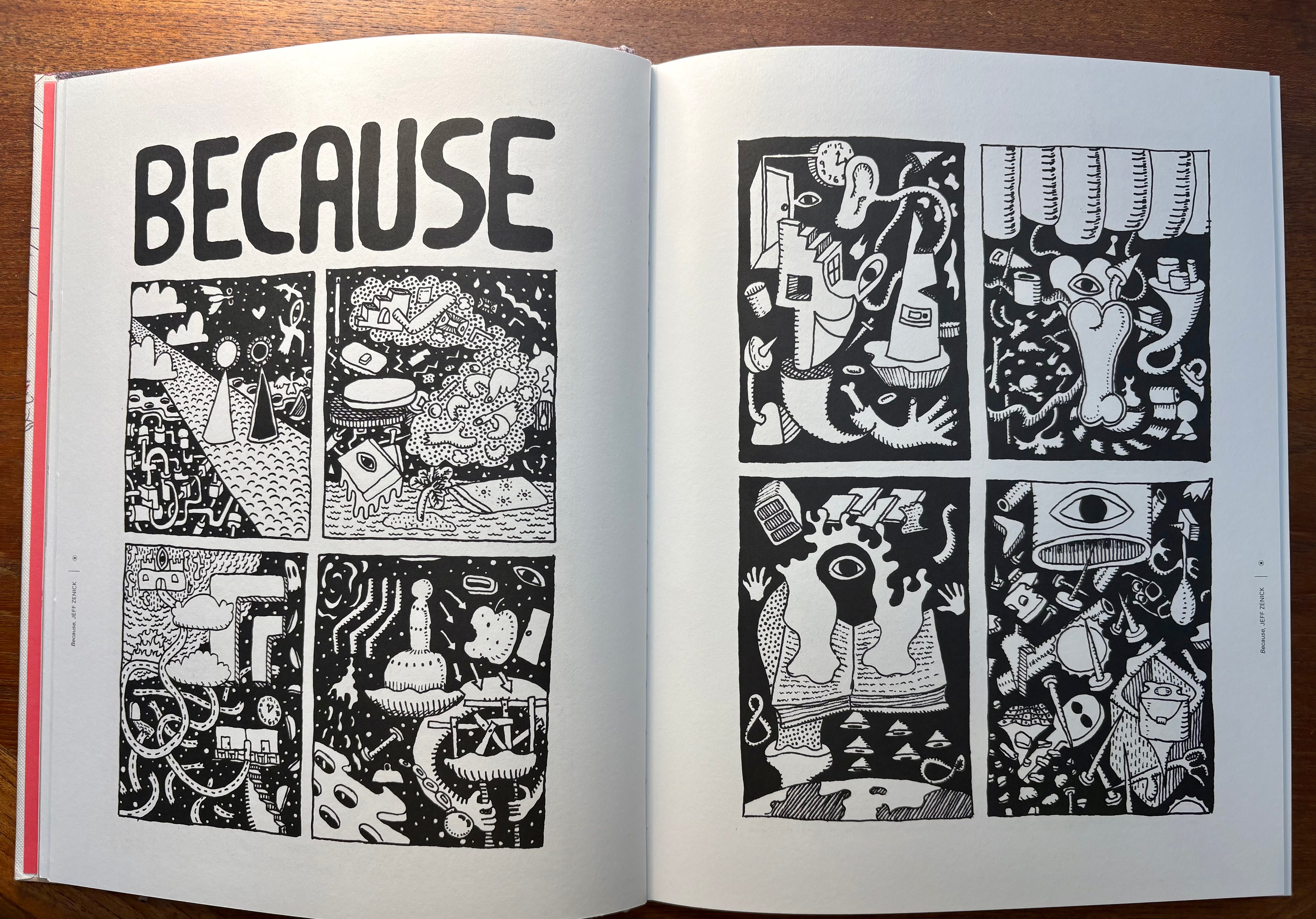
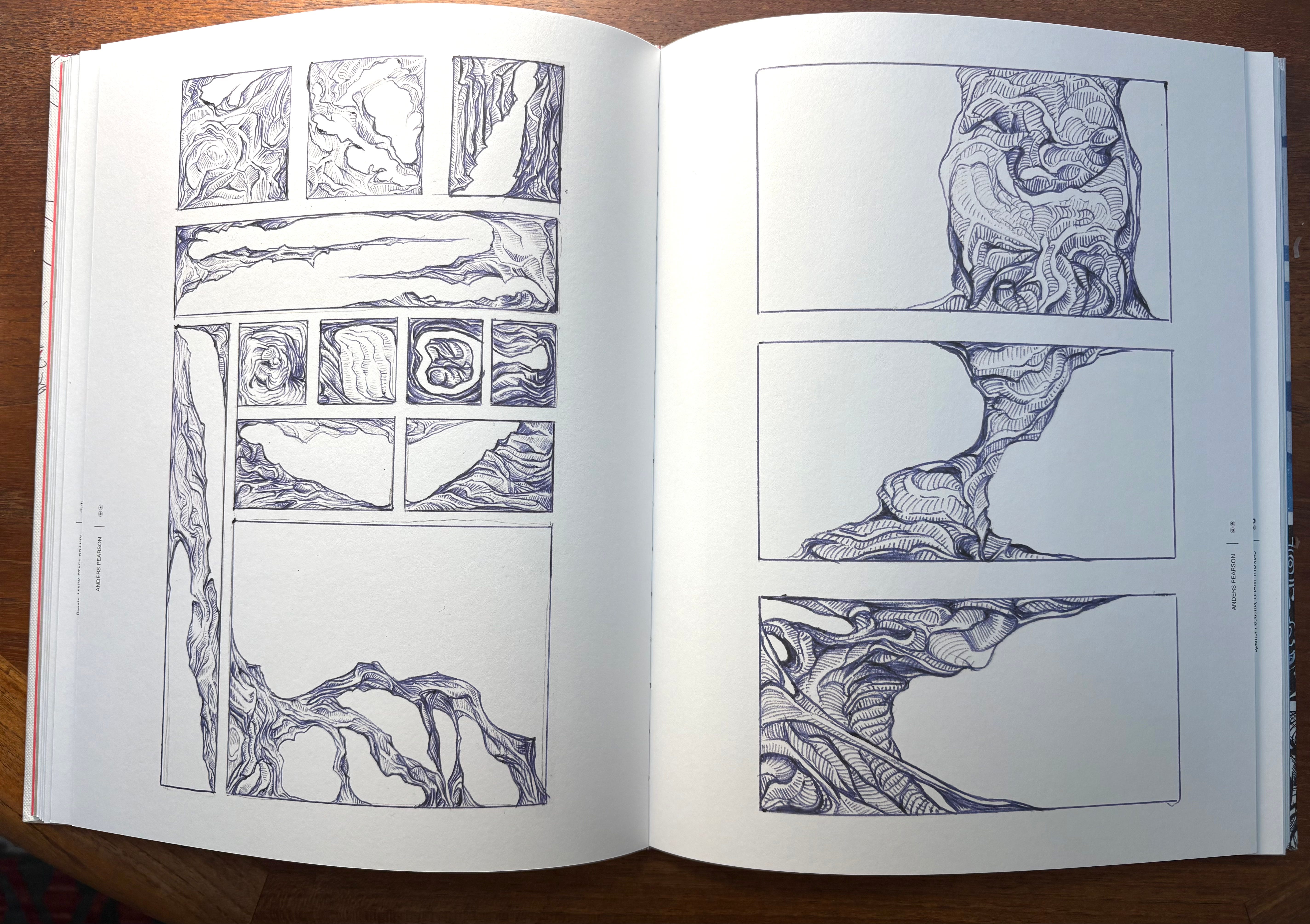
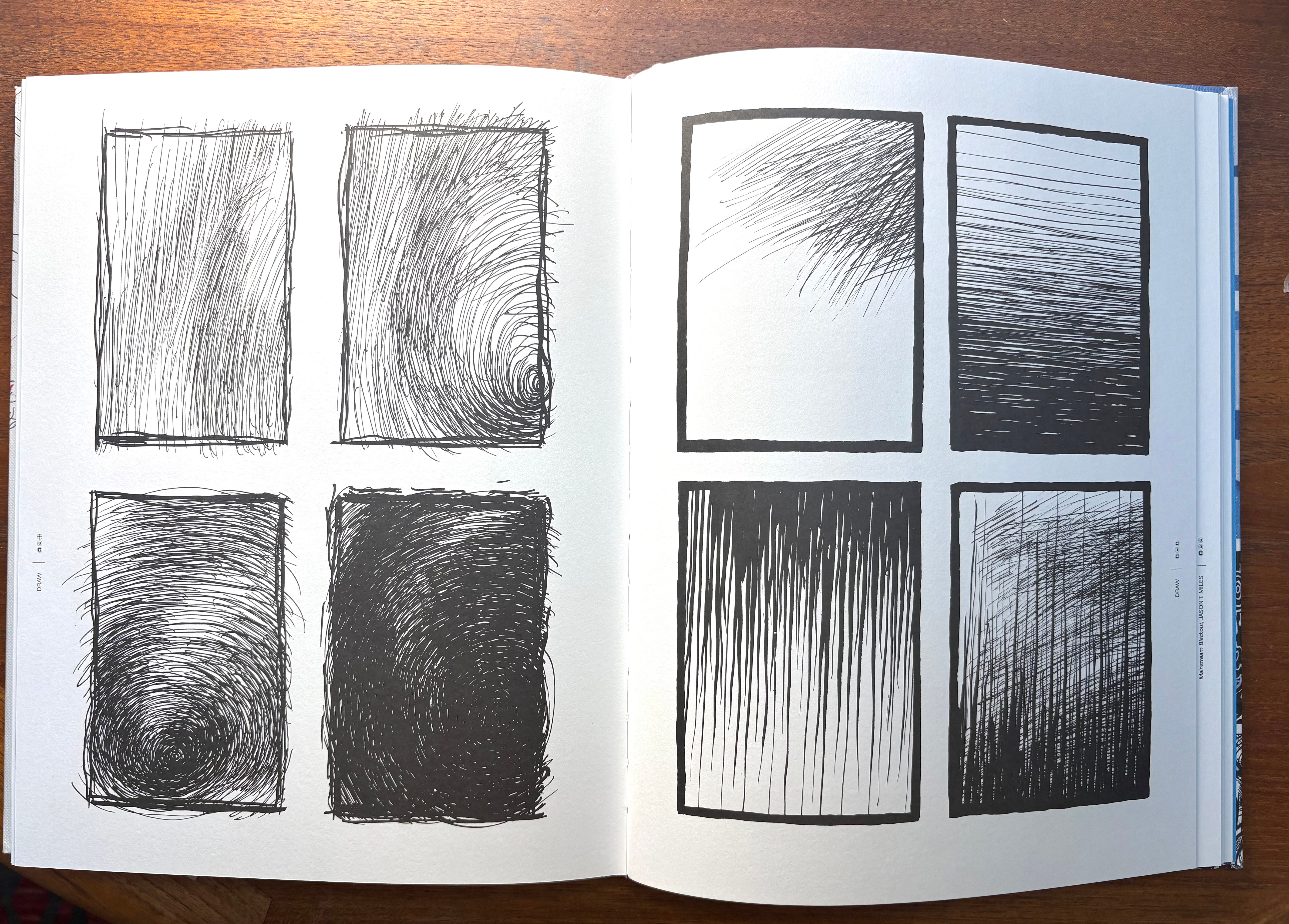
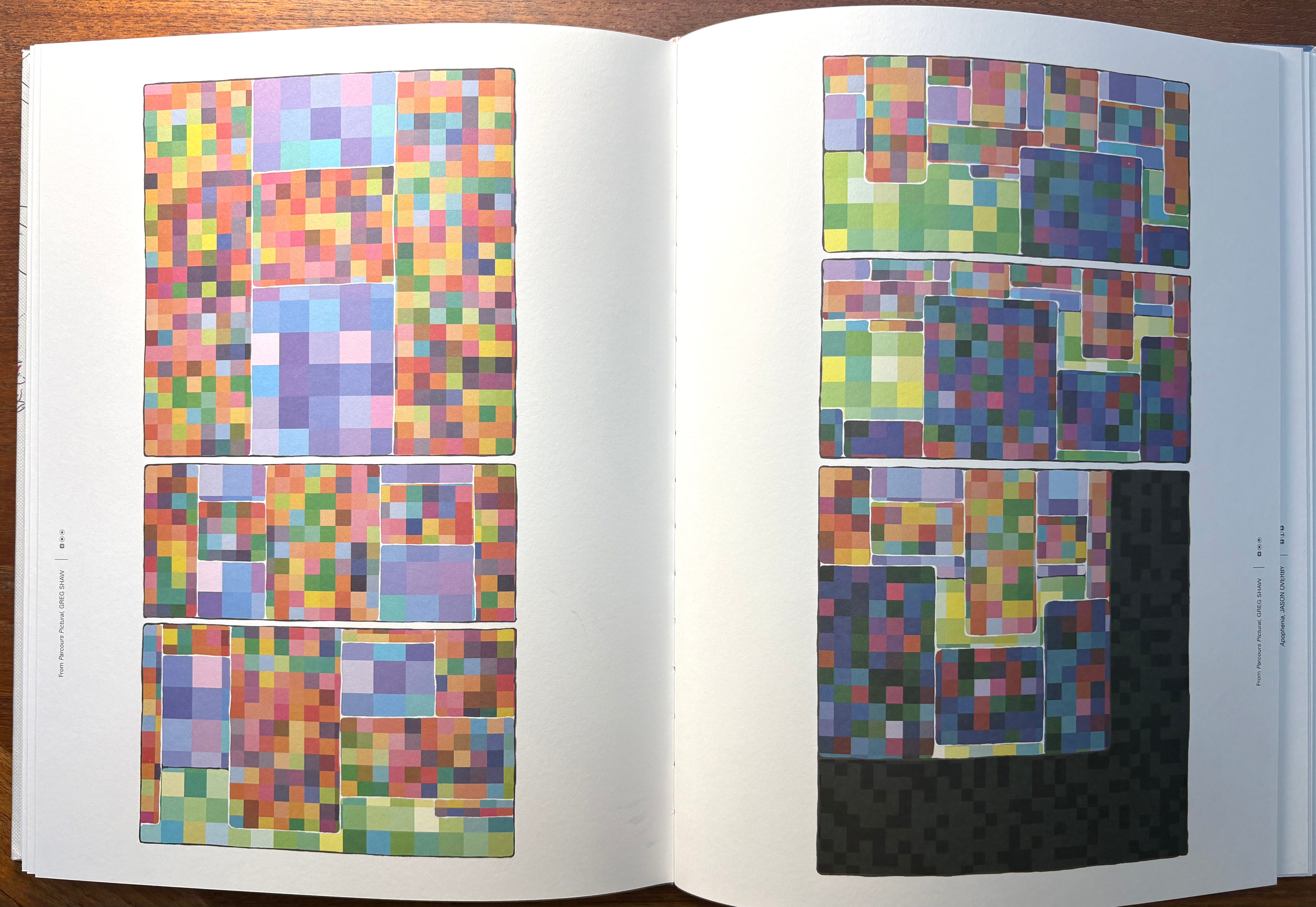
SEE? Told you they were cool.
Abstract comics first came on the scene in the 1920s, with painters who created series of paintings that suggested a sort of narrative. Abstract comic! Later, in the 50s, abstract expressionist painters like William de Kooning collaged multiple drawings together in a grid, creating a sequential motif. Abstract comic! And remember that 1960 book The Labyrinth, by Saul Steinberg, that inspired our A to B drawings? There are drawings in that book that use a four panel structure but have no real subject. Again, abstract comic! After that, things just got more and more abstract, even psychedelic. And today it’s a form ripe for exploration.
So let’s take a stab at it ourselves, GUT people.
An abstract comic uses the form of sequential comics, and throws representation out the window. These do not have to be literal. They do not have to be about “something.” What matters is that you FEEL something changes over time. They can be about shape, or color, or line, or space, or text, or whatever you want.
They remind me of a wonderful lesson we did on “emotional suites” featuring our spiral queen Louise Bourgeois, back in the day. All the drawings need is to be related, and we should see them in some sort of order. It’s like the ultimate play ground for making four tiny cool canvases that we pull a viewer through, one by one (while also still considering them as a “suite”).
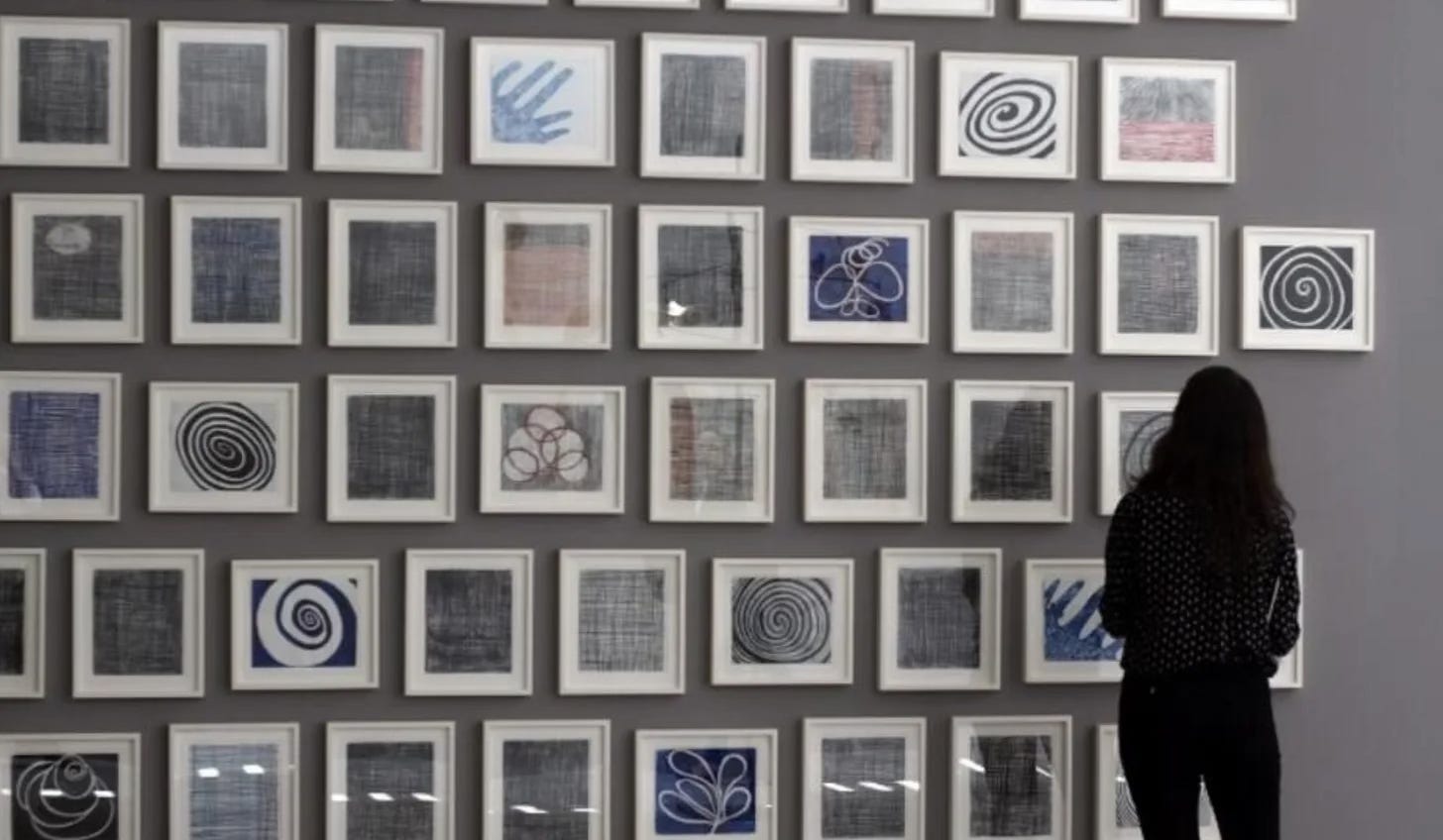
Also different today from yesterday: the shape of our four frames. Yesterday we worked with a pretty strict and structured grid. Today, anything goes. They can be any shape or size. They need only fit together, and be read in some sort of order.
Make sense?
This is a big launch moment, GUT peeps. You are using all your play, your basic drawing skills, the delight you discovered through looking at the world around you, and the imagination you’ve cultivated within — and bringing them all to bear into a very cool, abstract drawing.
Ready?? This assignment is a true drawing experiment. And you are ready for it.
Let’s do it.
