


Hellllooooo GUT peeps!
Today, we’re turning our attention to something that, like food, we drape ourselves in every single day — and yet we often overlook the wonderful details and stories they contain. I’m talking about our clothes.
Clothing
“Artists and writers are particularly attuned to the stories embedded in objects. Drawing an object is a way to experience the object in a new way, and reexamine the memory associated with that object…” — Emily Spivack
Emily Spivack is the author, journalist and artist behind the phenomenal project Worn Stories. Emily spent years interviewing people about clothing that was meaningful to them. That turned into a book, which then became a show on Netflix. Here’s the trailer for the show:
And here’s the description of the Worn Stories book (it’s so good.)
Everyone has a memoir in miniature in at least one piece of clothing. In Worn Stories, Emily Spivack has collected more than 60 clothing-inspired narratives from cultural figures and talented storytellers. First-person accounts range from the everyday to the extraordinary, such as artist Marina Abramovic on the boots she wore to walk the Great Wall of China; musician Rosanne Cash on the purple shirt that belonged to her father; and fashion designer Cynthia Rowley on the Girl Scout sash that informed her business acumen.
I asked Emily if she thought drawing a meaningful (delightful!) article of clothing was a useful practice and what GUT members would get out of it. Here’s what she said:
“Artists and writers are particularly attuned to the stories embedded in objects. And drawing an object is a way to experience the object in a new way — and to reexamine the memory associated with that object. And sometimes even allow yourself to let go of the object.”
(I have a hard time letting go of objects and clothes. Maybe you do, too. I sometimes wonder if drawing objects would help the more sentimental of us cull our collections…)
Today, we are taking Emily’s approach to our OWN wardrobes. But first, let’s look at other artists who celebrate clothing — theirs and other people’s. I’ll share some of mine, too. :)
Some sartorial inspo
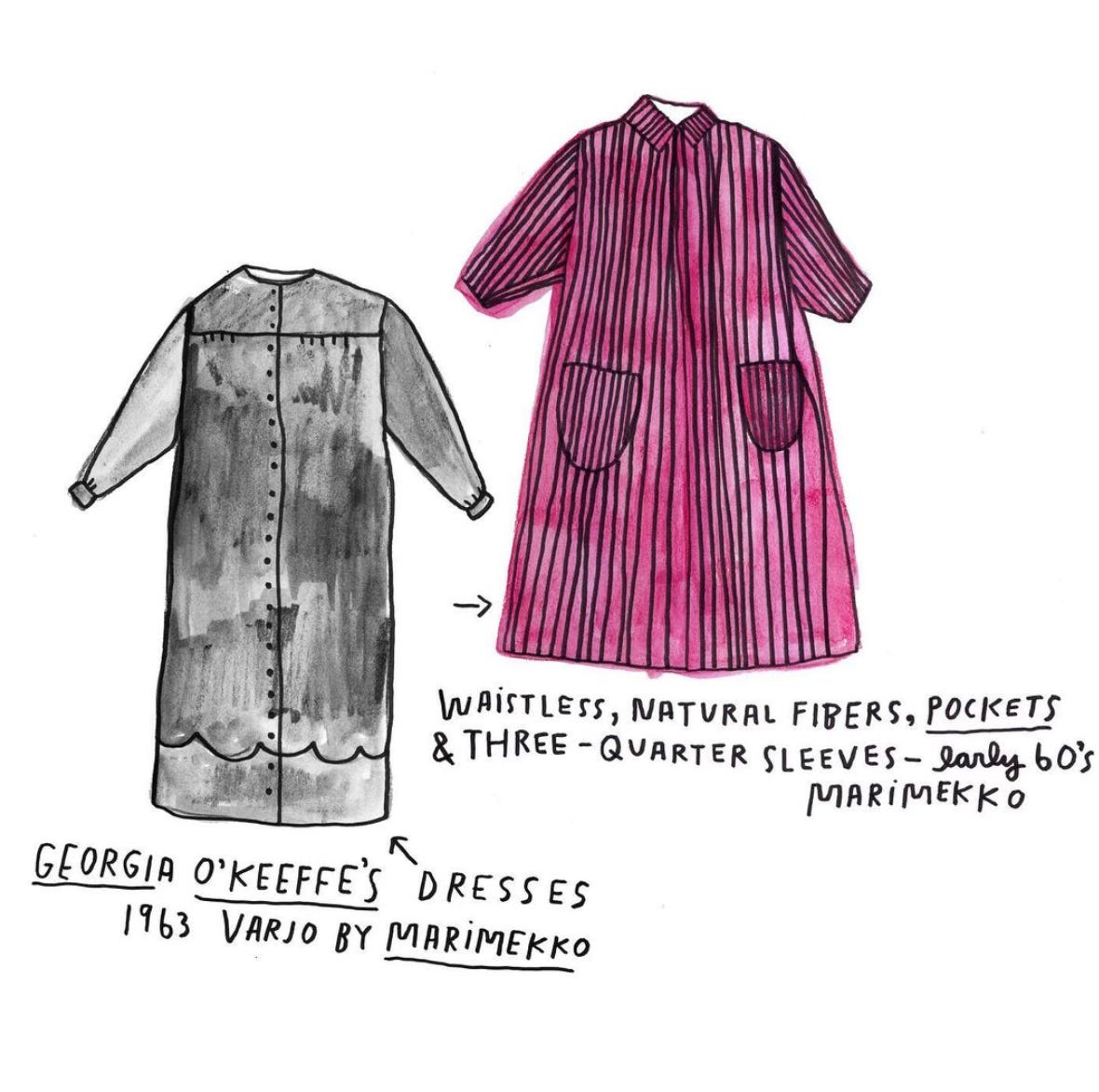
Artist, Illustrator and educator Kate Bingaman-Burt has long documented every single thing she buys, including her clothes. It’s such a cool way to think about our consumption, be grateful for the things we have, and be aware of the things we do not need. She also has documented other people’s clothing.
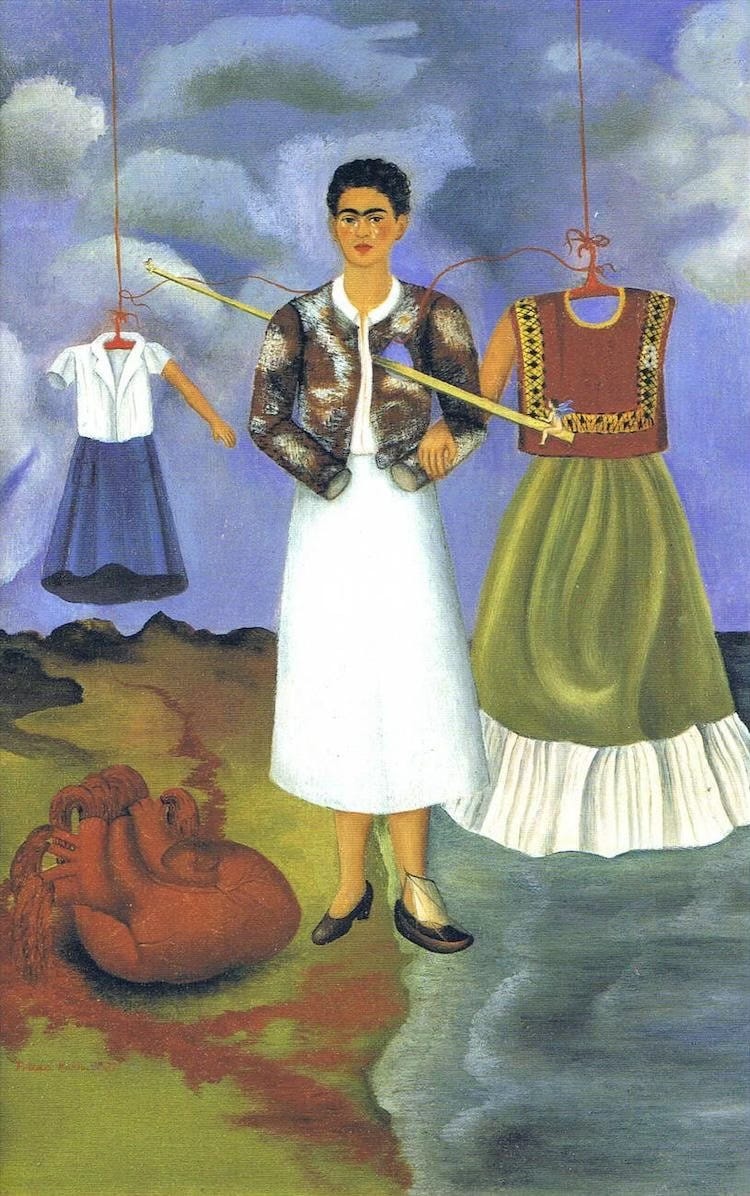
Another artist whose work included clothing as a theme was Frida Kahlo. Her self-portraits were often highly narrative. They told a story. In the 1937 painting below, titled Memory, The Heart, the three outfits represent three aspects of her identity: the western clothes she’s wearing, a schoolgirl outfit, and a traditional Tehuana costume.
It’s not clothes, but I have to point out the giant heart ripped out of her chest, laying on the ground. Frida painted this when she found out her husband, the muralist Diego Rivera, was having an affair with her younger sister. Oof.
Did I mention I’m a double Scorpio? Moving on.
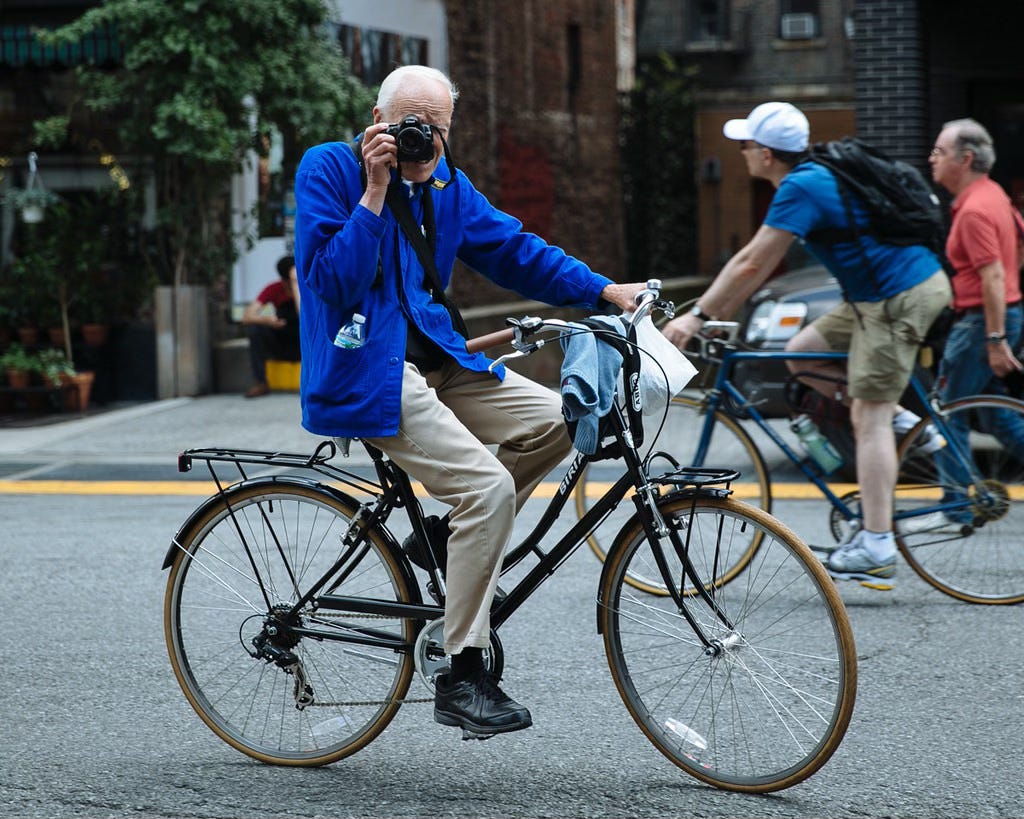
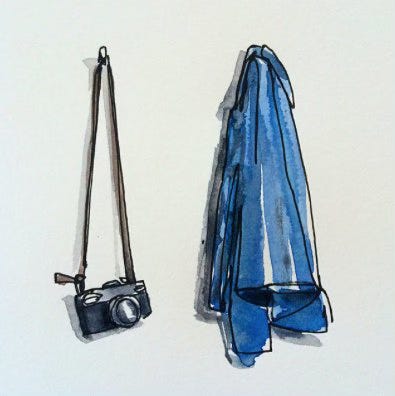
Anyone remember the New York Times street-style photographer Bill Cunningham? As documented in the excellent documentary about his life and career, he was always recognizable in his blue chore coat with a camera around his neck.
When Bill Cunningham died, I drew a little memorial to him featuring his uniform. (Is there something you wear so often people associate it with you?)
Clothing can be light or heavy—and I don’t mean just the materials. Several years ago I had the opportunity to travel to Guantanamo Bay for the New York Times. I was only the fifth artist allowed on the base and in the courtrooms (no photographers allowed, only drawers!) The NYT sent me to document the culture of the courtroom. Specifically, I was there to draw the clothing the detainees and lawyers wore and depict how they wore them — their postures, interactions, and general performance in the courtroom.
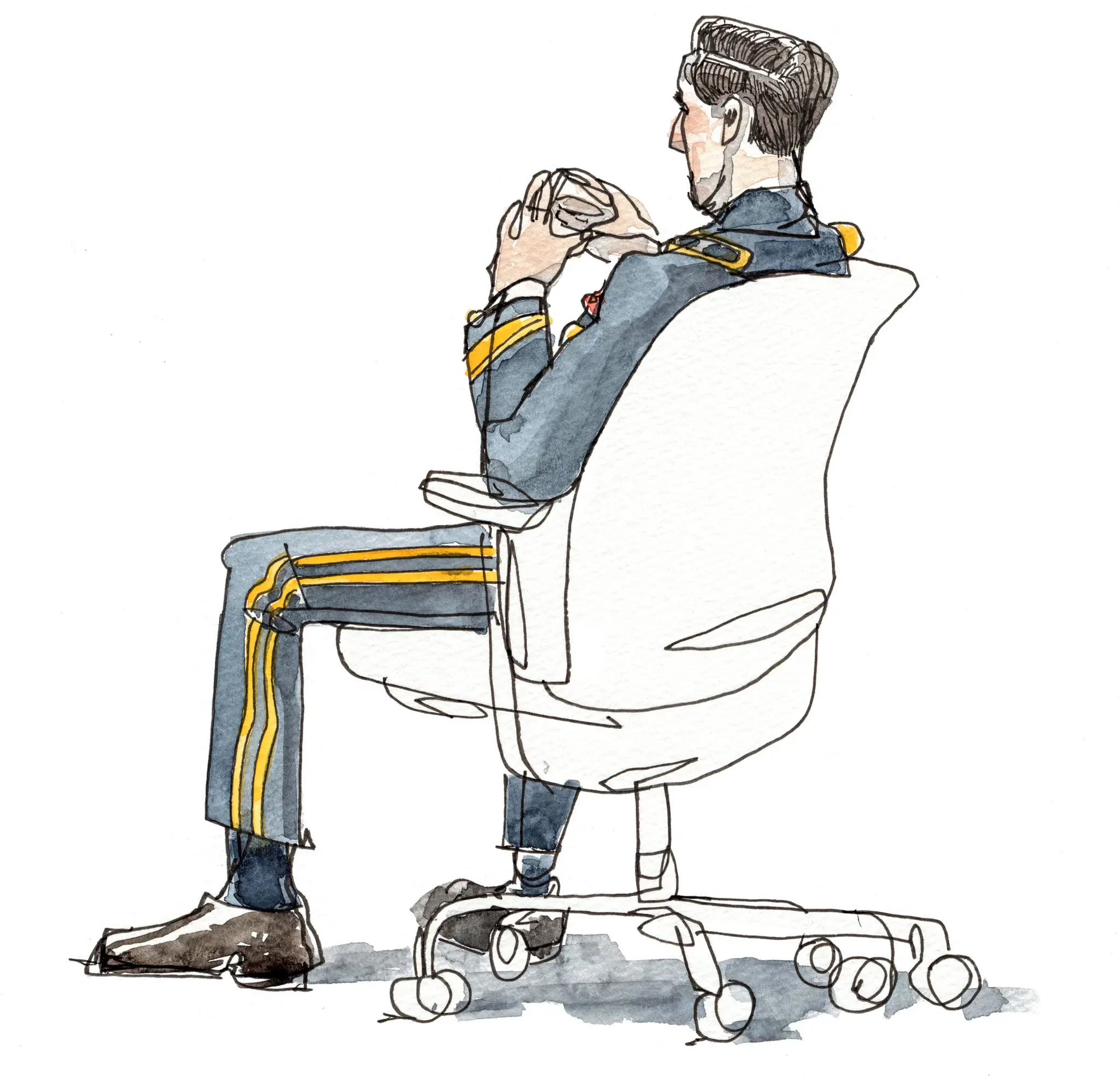
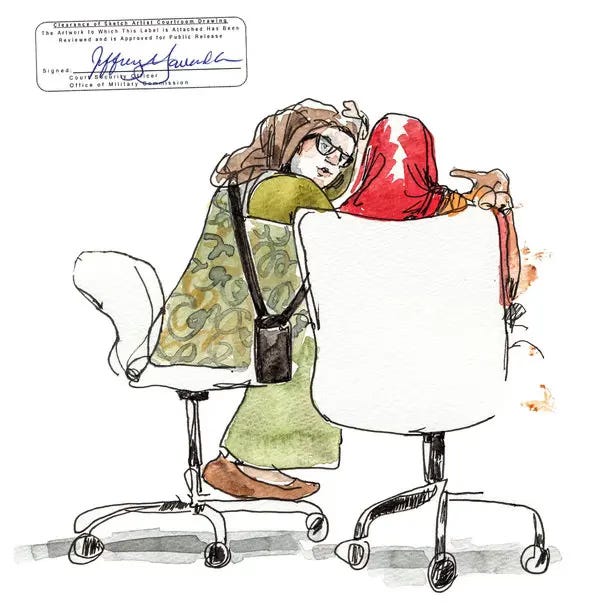
A lot of people regard fashion as theater. At Guantanamo I saw that notion taken to a new (very difficult to stomach) level. This was the opposite of delightful, but an important artistic experience none the less. Never before have I seen clothing carry such weighty stories.
And on that light note (heh), let’s turn to our own wardrobe… and find a little DELIGHT in the stories woven into our clothing.
