

Day 13. Light & Shadow & Form, Oh My!
A LESS=MORE mini-lesson to add depth to art, and life.

Hello wonderful GUT peeps.
Day 13! How is GUT’s week of Drawing Basics treating you? You’re doing GREAT.
Today we take a little peek into the LIGHT. And dark. Two sides, same coin.
One thing that makes a drawing really come to life — any drawing — is a simple shadow. Why? Because a shadow makes an object three-dimensional and it grounds it in space.
I was going to give you a whole lesson on value (that’s the word for light/dark in art-speak), but LESS = MORE. Instead, I’m just going to give you one tiny intro and show you my favorite trick: the Drop Shadow.
To do that, I have to explain one simple, important thing. IYKYK. And if not, everything is about to change for you. Hold onto your sunhats.
How light and shadow work.
Alright, here are the basics. We start with this flat, circular shape. I put a horizon line behind it so it’s not just floating in space. Still flat, tho.
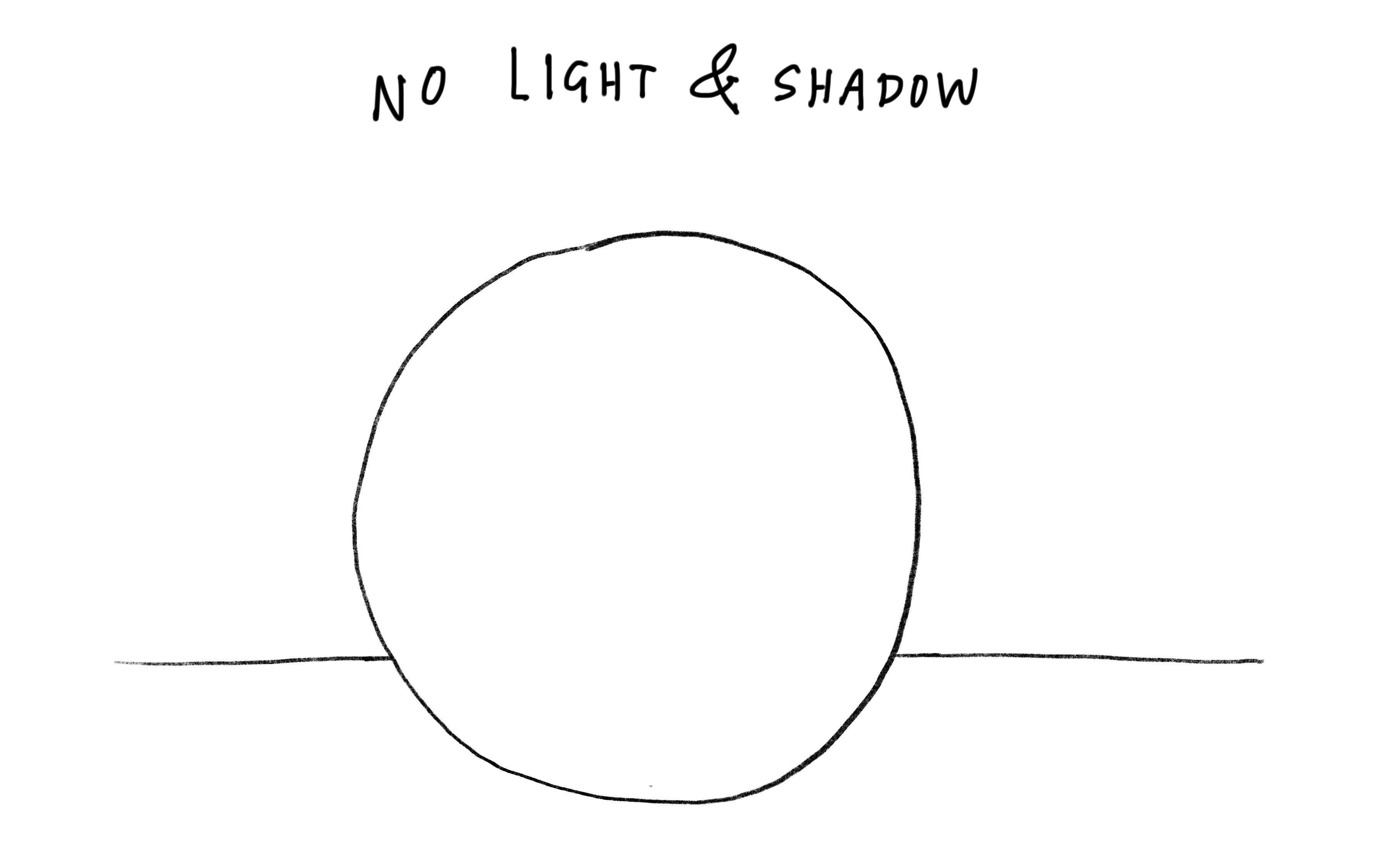
Add a light source, and drumrollllllll……
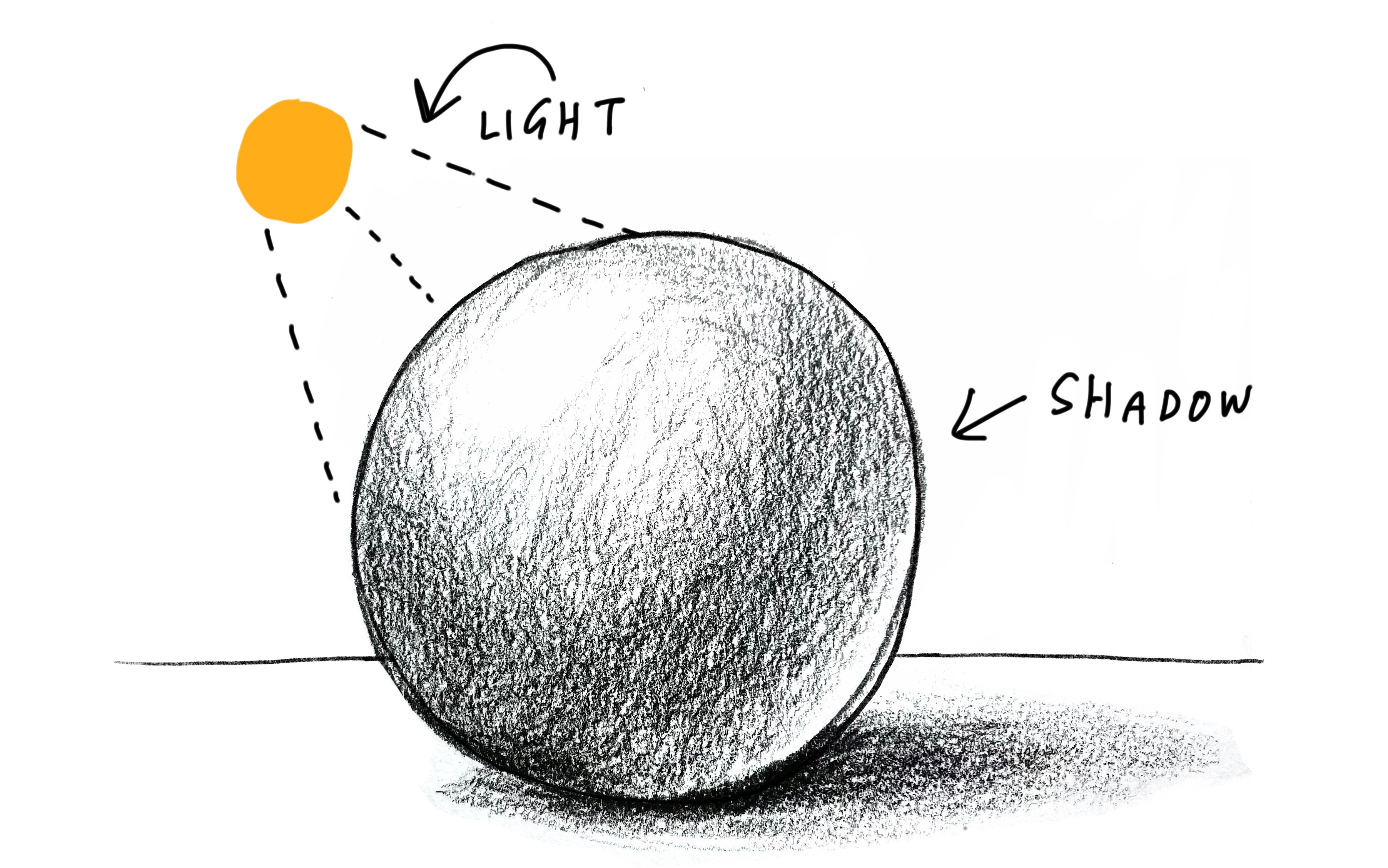
A SPHERE. It now has mass. It’s a form. How did that happen?
Where the light hits, it’s light. Where it doesn’t, there’s shadow. But look closely at the value on that sphere and in the shadow on the ground. It’s not like there's just one bright light area and one dark shadow area. There’s a TON going on in there. Different amounts of light and dark. But since we are doing less = more in 2026, let’s just stick to the basics.
The bright area on the object is called the highlight
The darker area of the object is called the shadow.
The area on the ground where the object blocks the light is called a cast shadow.
Look what happens when we move the light around. What happens to the highlight, shadow, and cast shadow?
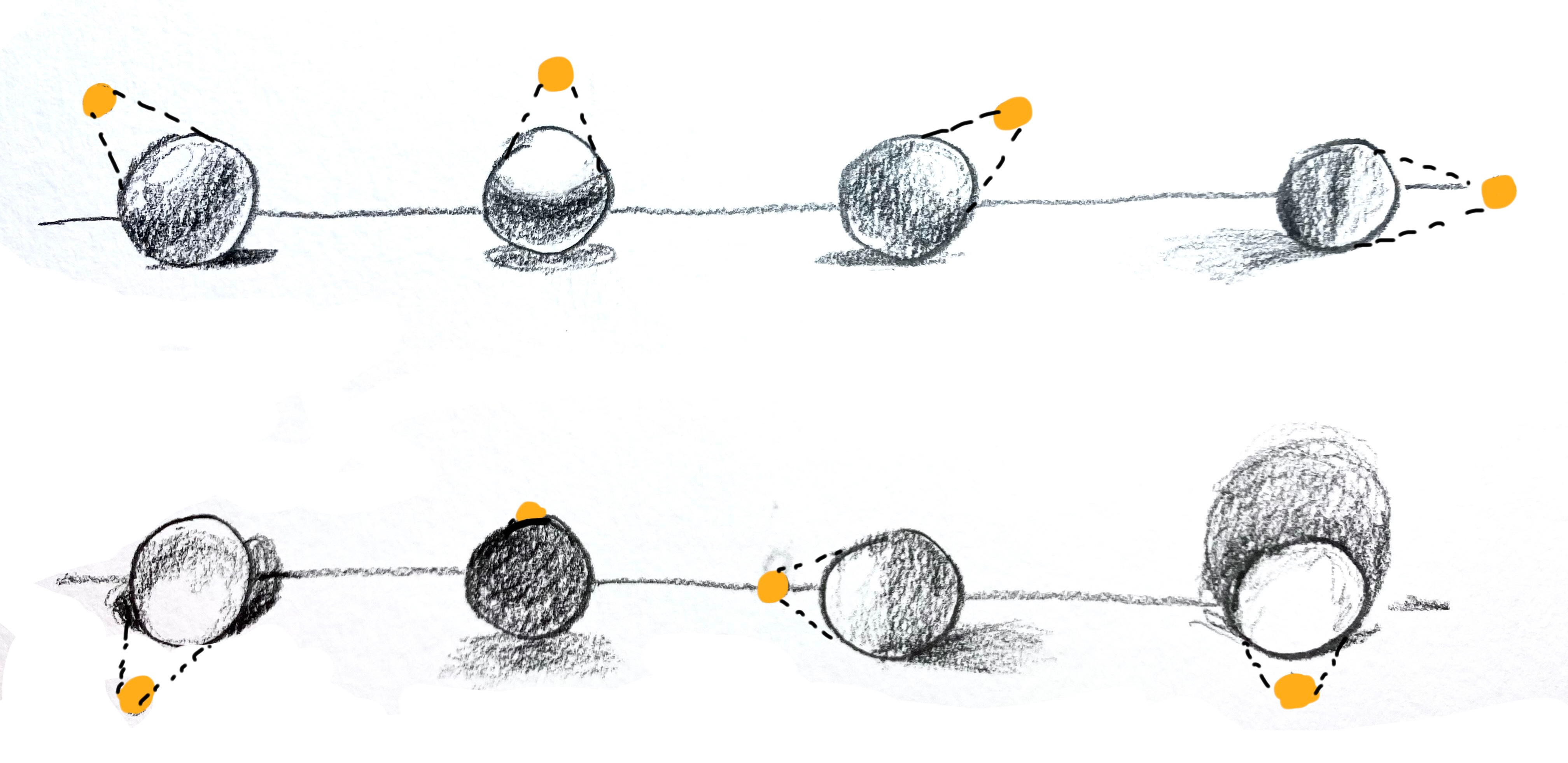
YES! They move, too!!
Now, stop reading and look around your room. Turn on a bright light if you have one and see how it casts new shadows on objects. Turn it off and see how the light and shadow change. Now imagine what would happen to the light and shadow if you were to point a bright spotlight at something. Imagine how the light and shadow would change….
Good job! It just takes a little practice. Soon you’ll be able to predict how light will form shadows in your drawings.
And that is what we are going to do today. Practice giving some objects shadows. Giving them mass in space. But fun.
So again, the basics:

Add light, get shadow. Now you have value. Add value, you have depth. Add depth, you have an interesting life.
Okay, let’s try this IN OUR SKETCHBOOKS. On a fresh page or the same one you’re using for Day 13, draw a bunch of shapes. Remember, there aren’t that many.
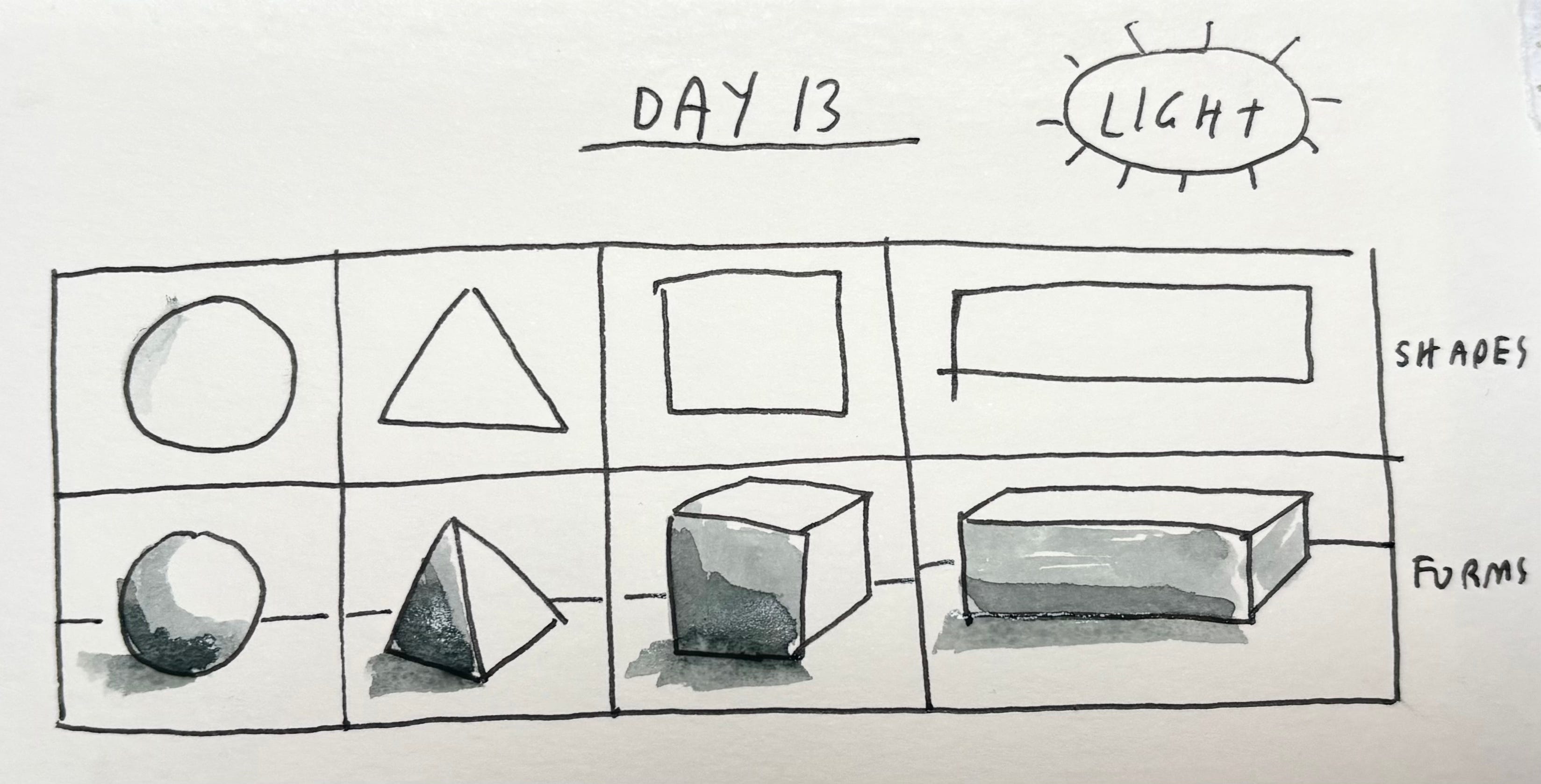
Then draw them again, but add horizon lines and make them 3D by adding volume and light, aka adding depth. You can use pencil or paint or pens, up to you.
And just like that, we are no longer floating in space. We have created depth. No depth without shadow. In life as in drawing.
Thus endeth the lecture.
Ready to apply this to a very, very serious art piece?? (Just kidding, it’s silly and fun.)
