


Hellloooooo DrawTogether Grown-Ups Table.
I loved seeing so many of you tackle last week’s daily drawing assignment with gusto (and pesto!). The chat turned into a real cornucopia of fresh fruits and vegetables, comforting bowls of soup, delectable pastries, and irresistable salty snacks. Even more delightful, it was filled with members lifting up one another and connecting with each other over their drawings and food. If you haven’t added your drawings to the community chat, it’s not too late! You are—we are—the best.
And just like that, we’ve reached our final week of summer daily drawings. It’s been an absolute dream.
Oh, wait. That gives me an idea…
WEEK 4: DREAMS
What you prevent yourself from doing and force yourself not to do, the dream will do with all the lucidity of desire. — Salvador Dali
Dreams are fascinating, aren’t they? Who knows what’s happening in there and how it happens. Yes, there are sleep researchers—but if you think they’ve cracked the code, you’re dreamin’.
While scientists still have a lot of unanswered questions, Mark Blagrove and Julia Lockheart found that “people who share their dreams have more empathy with each other” and visual interpretations of those dreams make that empathetic response even stronger. Sounds like something we GUT members should explore together.
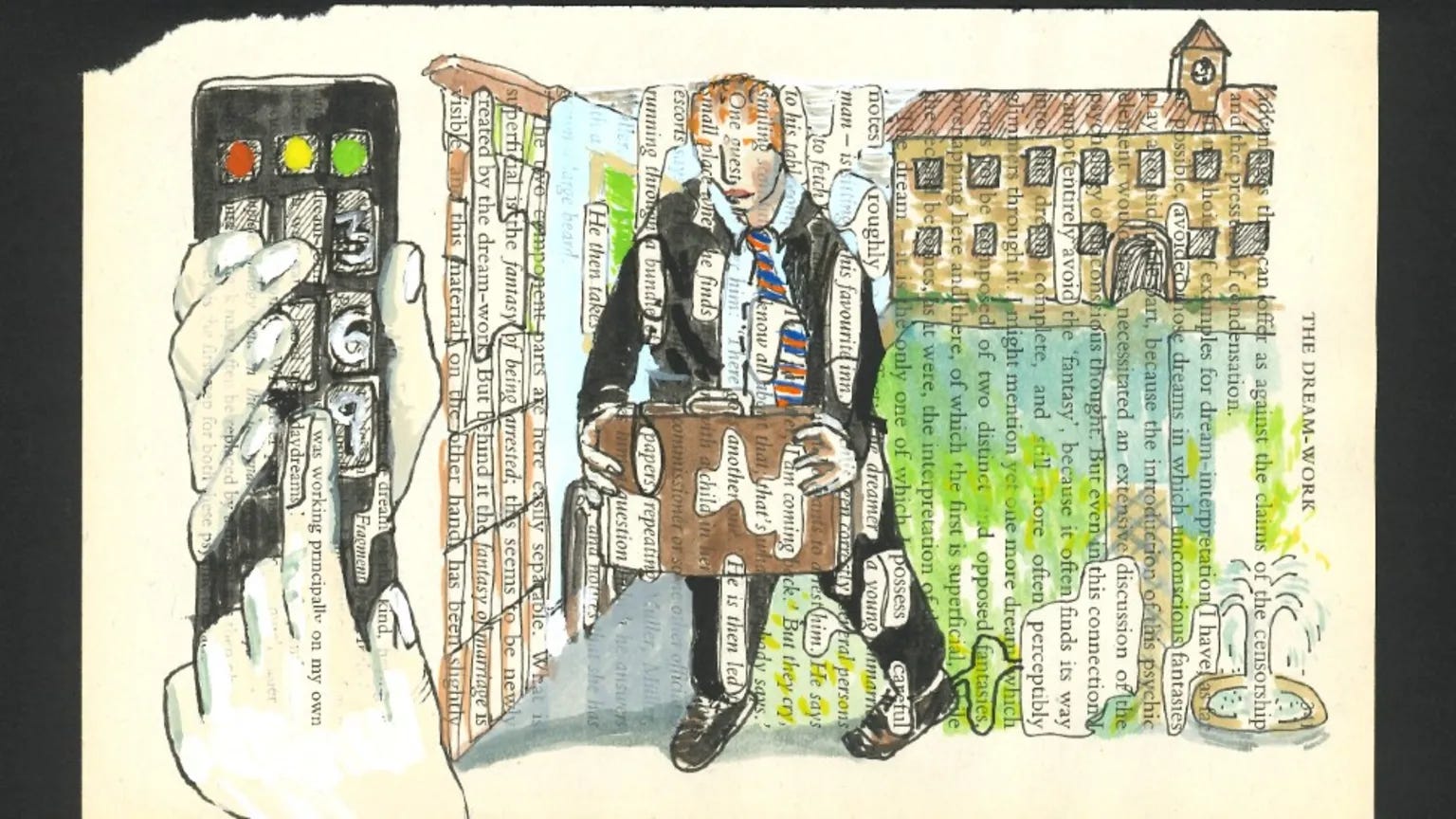
Artists have been taking inspiration from their dreams for centuries. The Surrealists, of course, made dreams central to their artistic practice in the early 20th century. They drew on Sigmund Freud’s then-new theories about the subconscious, and valued dreams the same way they valued chance in making art. Same with Carl Jung, famous for his work on the subconscious—he considered the dream a representation of the psyche.
I can listen to dreams. It’s very literal. There’s nothing non-literal when I talk about listening to dreams. I feel that it is a guiding lane....By bringing those voices into the equation, it really opens it up to start thinking differently about time, to start thinking differently about mortality, to start thinking about what life can be. — Jeffrey Gibson
Whatever you think of dreams—maybe you barely think of them at all—we all dream for about 90 minutes each night. If we don’t, our brains can’t function. While many of us struggle to remember our dreams, dream recall is something that can be improved. If you are interested in bringing to light what happens at night, here are some tips and tricks from Harvard researchers.
Back to drawing. Let’s look at some artists who have been inspired by dreams.
Dream-Inspired Art
Albrecht Dürer
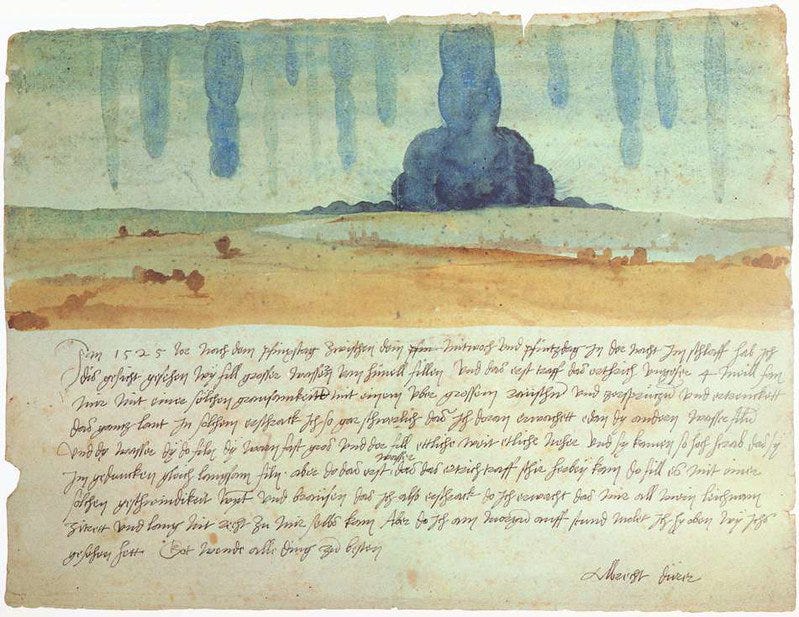
A German Renaissance artist, Albrecht Dürer is best known as a drawer and printmaker. But he was also an incredible painter. Here he records a dream he had of a great storm:
Salvador Dalí
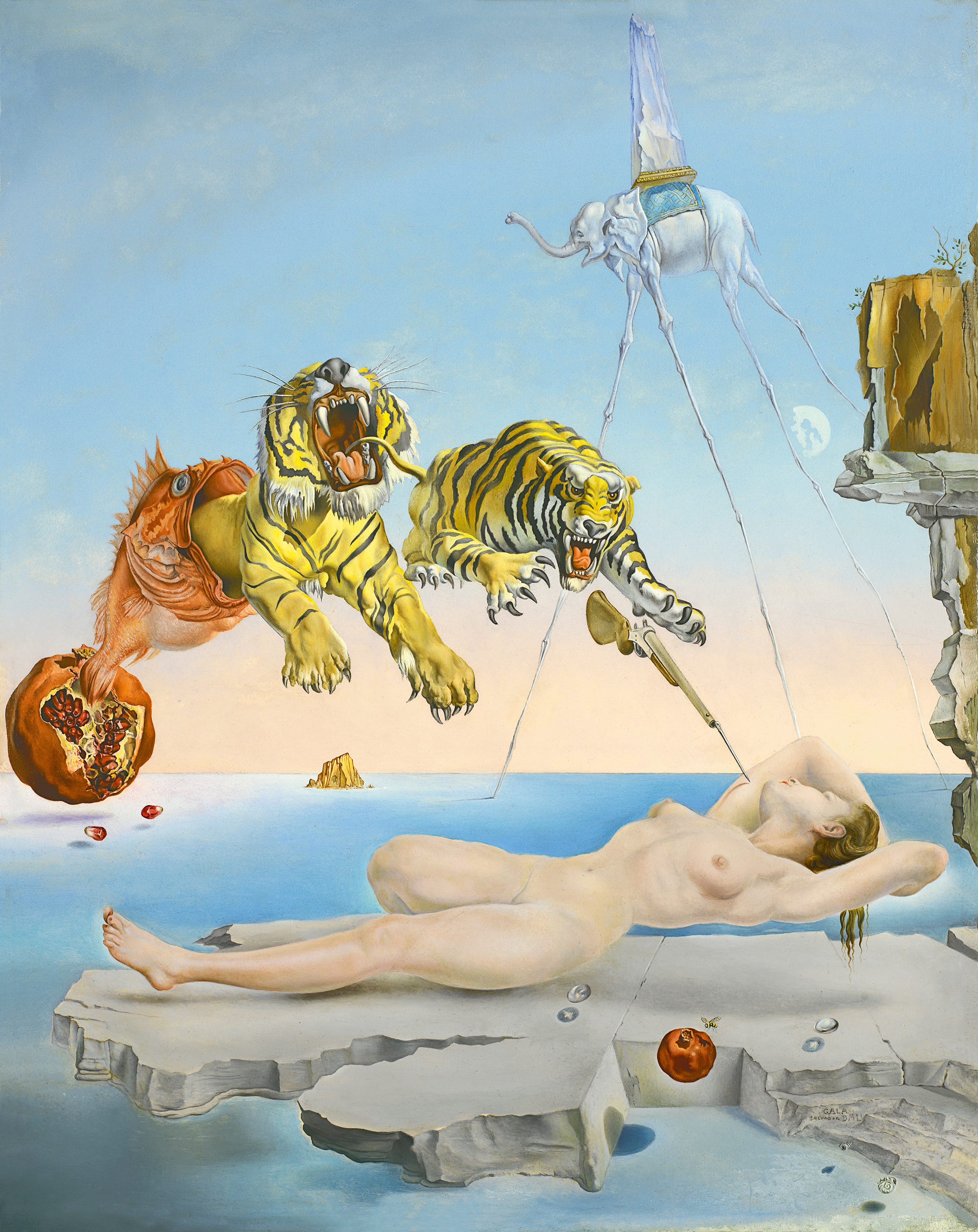
Surrealist painter Salvador Dalí developed a specific sleep-dream routine known as “Slumber with a Key”: You hold a heavy key in your hand so that it drops when you fall into that initial creative moment of dreaming—called the hypnagogic state. It wakes you up as your mind goes between states of consciousness. (Thomas Edison and Albert Einstein were also known for doing something similar as a way to access creative solutions to their most pressing scientific problems.)
Remedios Varo
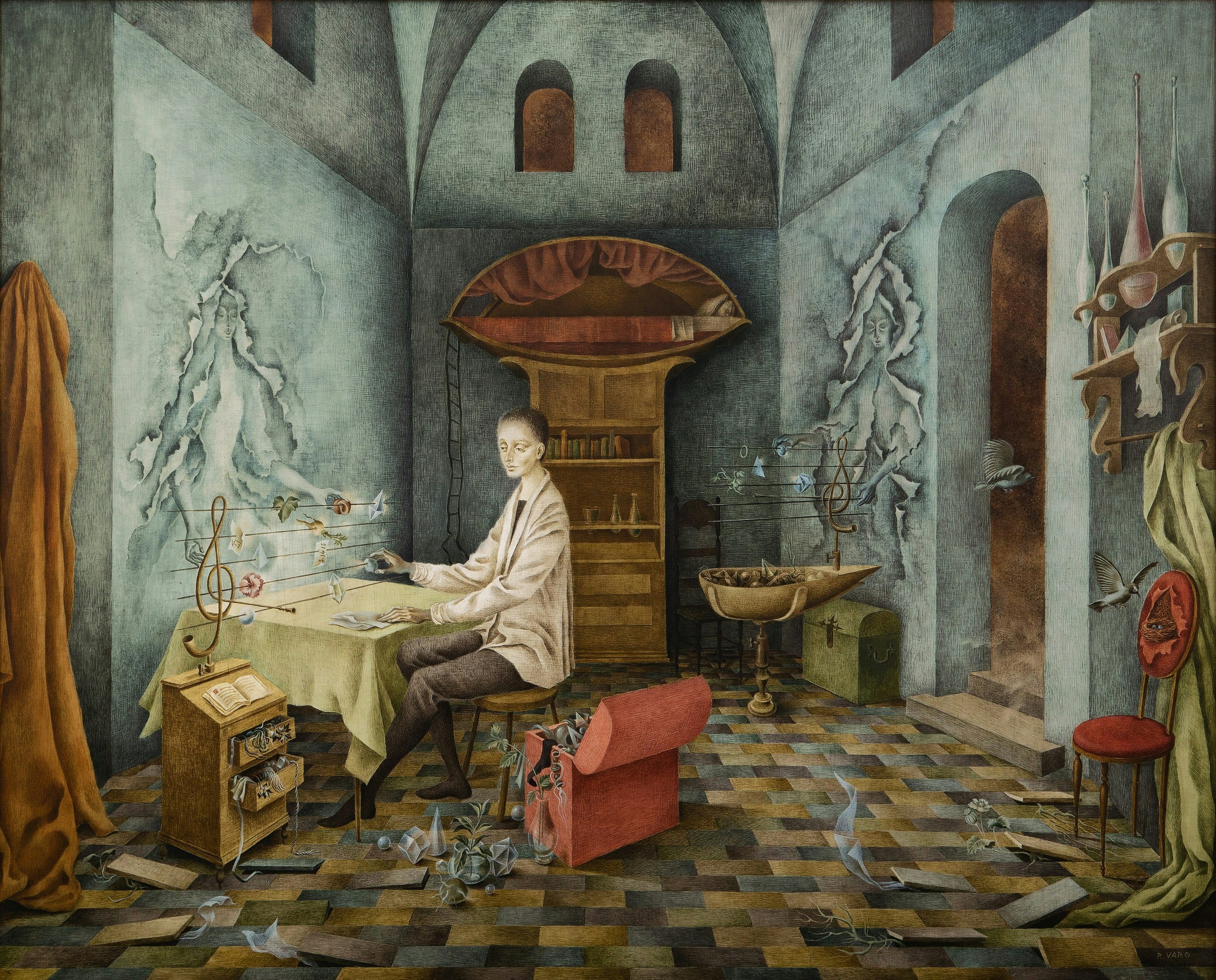
Born in Spain, Remedios Varo was active in Surrealist groups in Barcelona and Paris until World War II caused her to flee to Mexico. There she formed a new creative community and developed her voice, drawing on Surrealism, scientific advancements, feminism, and astrology. She once said, “The dream world and the real world are the same,” and her paintings often have a dreamlike quality.
Ellsworth Kelly
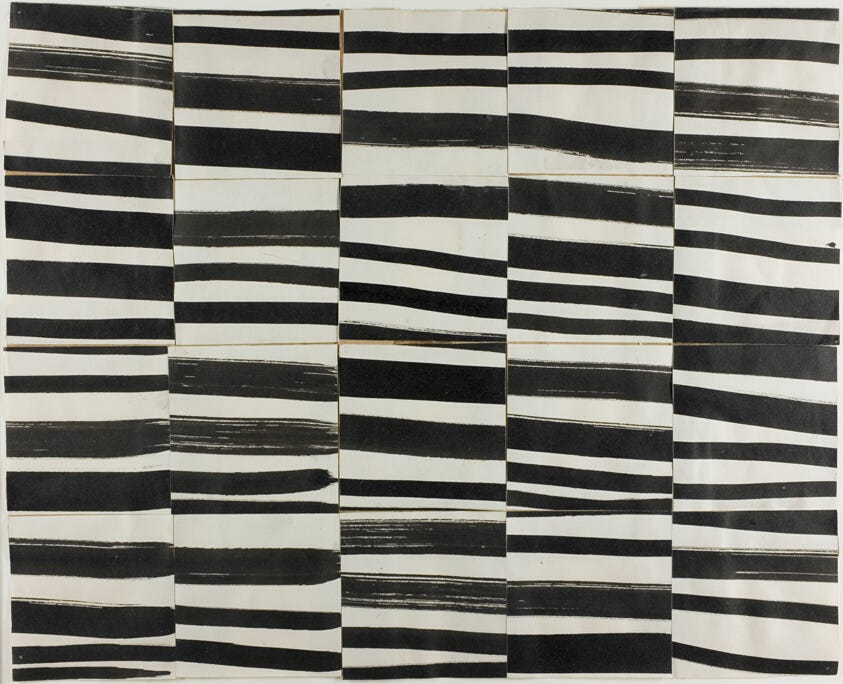
While living in Paris after World War II, Ellsworth Kelly met influential artists such as Jean (Hans) Arp and John Cage, and they encouraged him to incorporate chance into his work. In a dream, he saw himself “creating an immense mural composed of square panels on which we painted black bands with huge brushes.” When he woke up, he thought, “This dream is something I have been waiting for.” He suddenly saw how to incorporate chance, both through bold brushstrokes and random rearrangements of canvas squares. This dream set him off on a new direction in his work.
Jeffrey Gibson
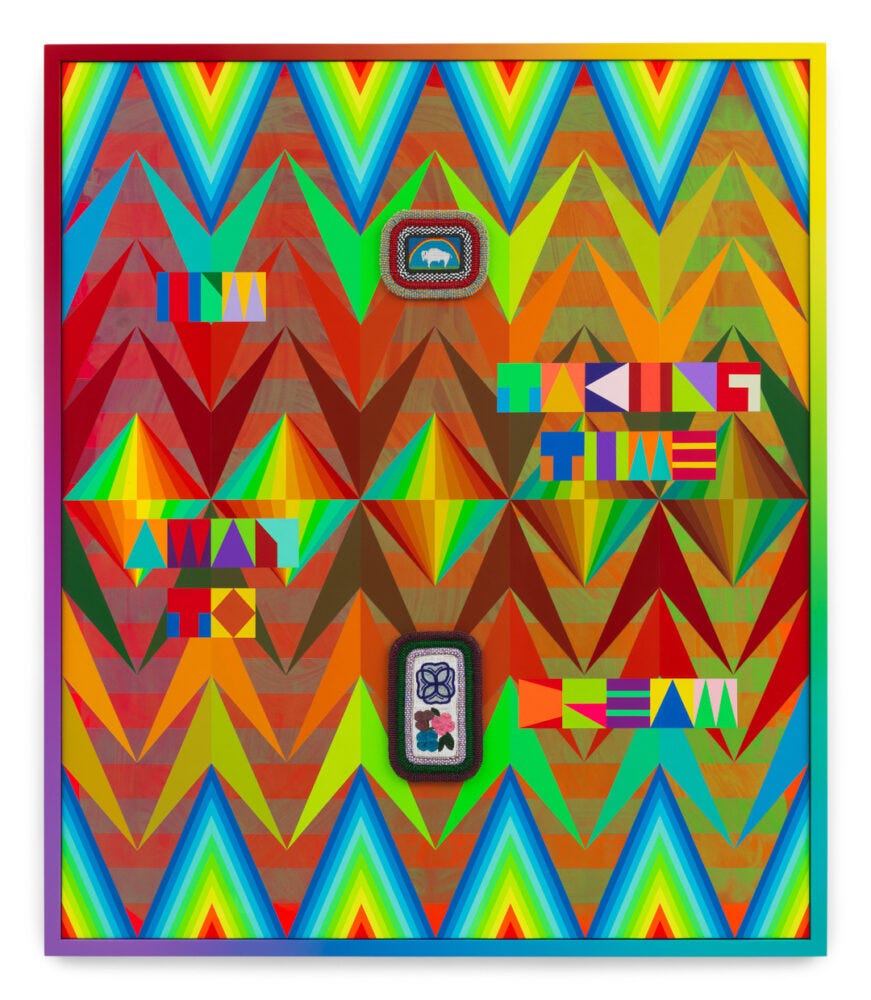
Jeffrey Gibson (Mississippi Band of Choctaw and Cherokee) explores dreams in his art both literally—by including the word “dream” in his art—and metaphorically, through his bright colors, designs, and advocacy for Indigenous communities.
Dreaming can often seem like a privilege. Through our dreams, we’re able to envision a different reality, and that’s an idea that I’ve approached with this body of work and by incorporating vintage objects—like a form of dreaming, Indigenous design employs symbol, in addition to abstraction, as a strategy to visualise what happens next. In challenging times, dreams are our ability to imagine in a way that’s not compromised. — Jeffrey Gibson
Now let’s take this inspiration into our own dreams and work. If you have an active dream life, great. If not, let’s use this opportunity to develop a dream recall practice and see what happens. And if you are completely uninterested in dreams, we’re going to expand the definition. There are all sorts of dreams. Daydreams. Dream houses. Dreamboats. Personal aspirations. So without further ado, our final daily assignment is...you guessed it.
